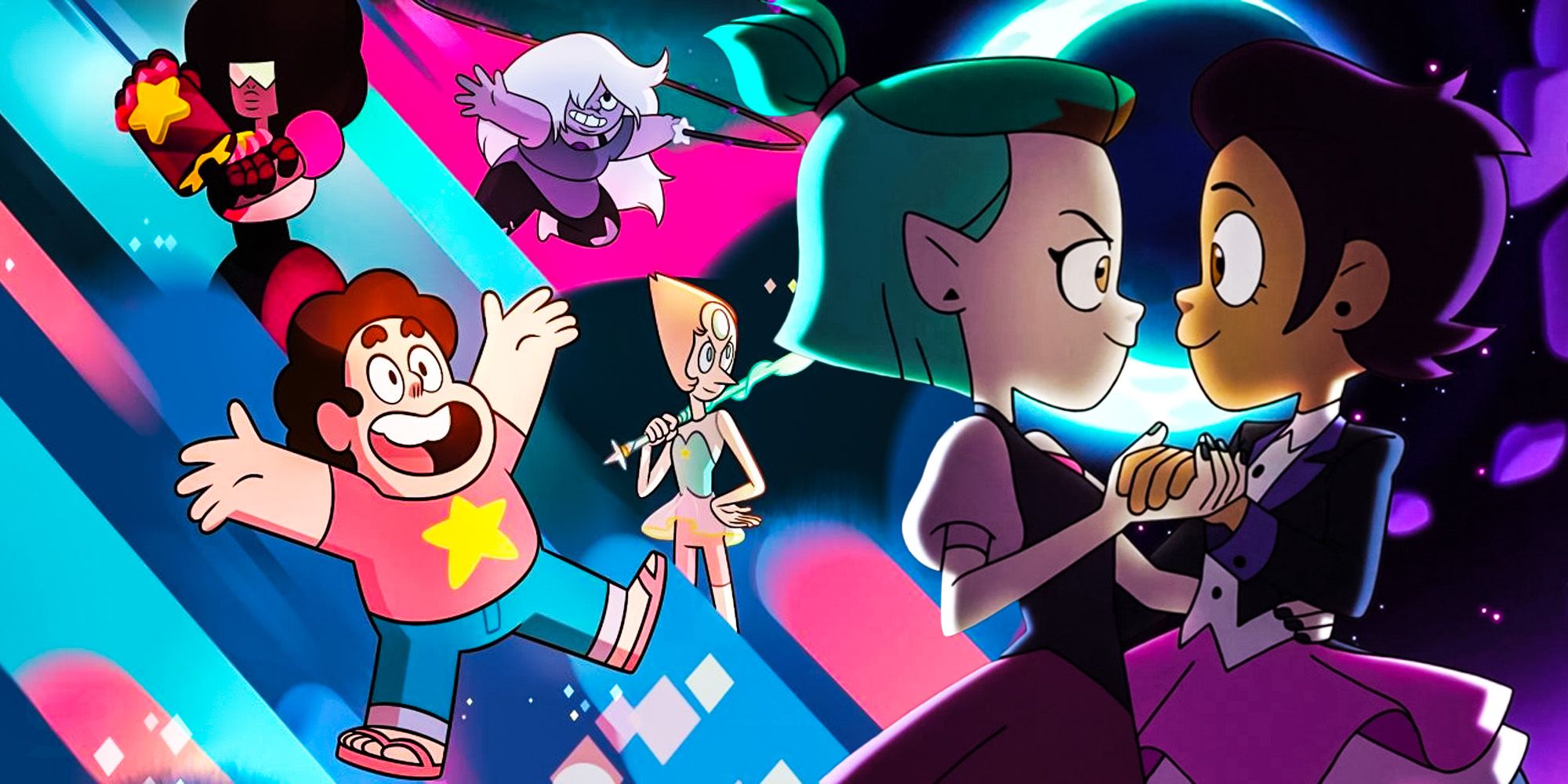
In 2013 Rebecca Sugar made television and LGBTQ+ history when they created the Cartoon Network show Steven Universe. Rebecca Sugar is a creator and artist who showed the world how beautiful, exhilarating, and successful LGBTQ+ stories told by members of the queer community can be. After several years of writing for Adventure Time, Sugar moved on to create Steven Universe, and produced The Steven Univese Movie and Steven Universe Future, from 2013 to 2019. The world of Steven Universe was one of the first cartoon shows that explored LGBTQ+ characters and relationships through genuine representation.
Steven Universe followed a group of gem-based aliens called the Crystal Gems. Before Steven was born, these Gem aliens were ruled by a group of four dictators named The Great Diamond Authority. They exercised power over Gems they considered “inferior” and colonized foreign planets for the glory of their empire. Steven’s mother, Rose Quartz, assembled a group of rebellious Gems and fought to defend the Earth and advocate for Gem’s rights to forge their own destinies. The powerful Rose Quartz was assisted by Garnet, Amethyst, and Pearl, who became known as The Crystal Gems. The Diamonds eventually abandoned Earth after decimating most of Rose Quartz' forces. In the aftermath of this intergalactic war, Rose started a relationship with human rock musician Greg Universe and then gave up her physical form to give birth to Steven. The show Steven Universe follows Steven as he learns to understand his powers, history, and purpose as a half-gem and half-human being in a world of intergalactic chaos, where he struggles to find anyone who is quite like himself.
Steven Universe aired during an age where most LGBTQ+ characters in cartoon shows were only included as the butt of the joke, but Rebecca Sugar’s show paved the way for more progressive representation. For five seasons, 160 episodes, and one spinoff series (Steven Universe Future), Rebecca Sugar depicted characters with various sexual orientations and gender identities with respect, dignity, and nuance. Characters like Garnet, Pearl, and Steven dealt with issues regarding self-acceptance, unrequited love, and found family that is profoundly relatable to most audience members, particularly those within the LGBTQ+ community. Steven Universe depicted various LGBTQ+ characters finding love, fighting battles, and dealing with heartbreak in an epic science fiction comedy cartoon show, and consequently created a better world for LGBTQ+ representation in cartoons.
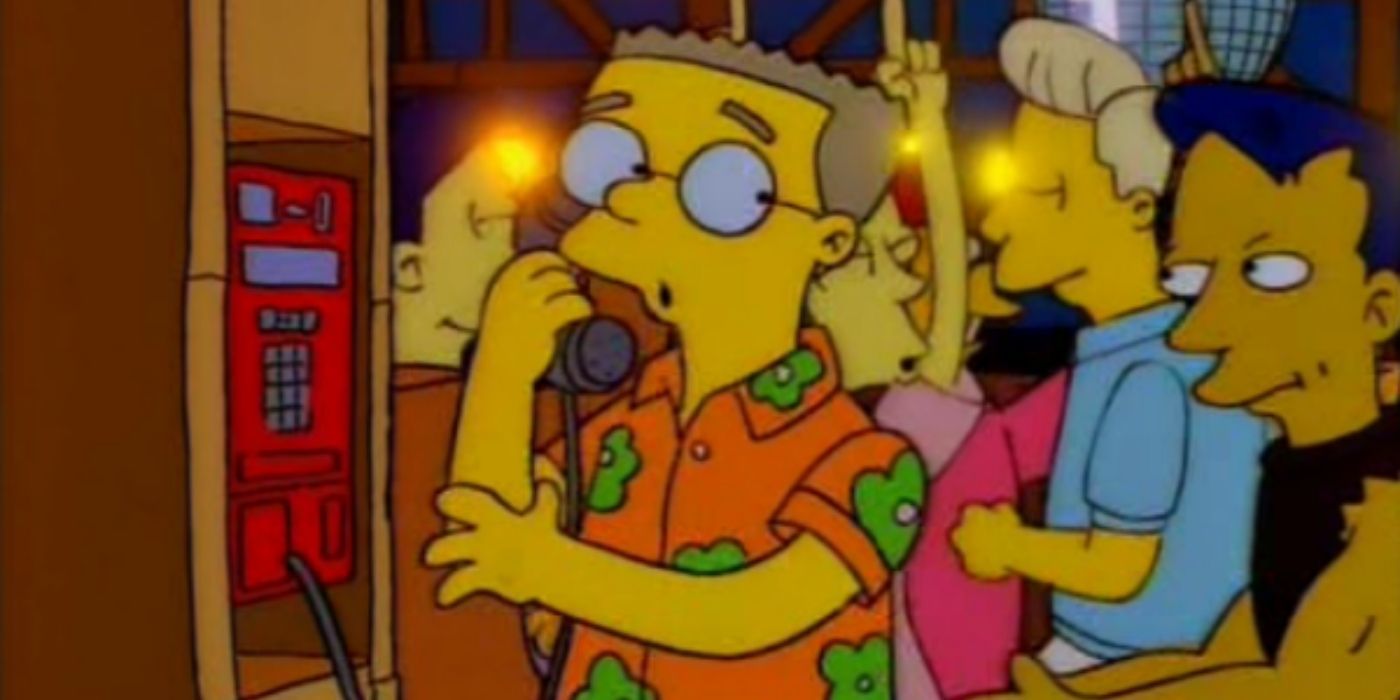
Before Steven Universe, most LGBTQ+ characters in cartoons were presented as a joke or relegated to minor character status, if they were included at all. For example, the character Smithers in The Simpsons was arguably the most well-known gay cartoon character for a long time. Smithers has been heavily implied to be gay since The Simpson's early seasons, and his infatuation with Mr. Burns was often played for comedy. Smither's sexuality was never seriously explored until 2016 when The Simpsons season 27, episode 17, “The Burns Cage” aired and confirmed he was gay. The writers of adult comedy cartoon shows like Family Guy or South Park often used LGBTQ+ characters like Mr. Garrison or Herbert the Pervert to derive humor from harmful gay stereotypes and rarely humanized them to the audience. More often than not, cartoon shows simply would not feature any LGBTQ+ characters at all. Even Rebecca Sugar herself was not allowed to explore a relationship between the characters Marceline and Princess Bubblegum while they were working on Adventure Time. However, in 2013 Steven Universe changed everything, and people loved it.
Steven Universe examined many queer-centric issues through its primary cast of characters. At first, the LGBTQ+ themes of Steven Universe were presented through metaphors but the show eventually explicitly outlined queer relationships and depicted non-binary characters. Although The Crystal Gems are coded as female (their appearance coincides with western ideas of femininity, and the Gems primarily use she/her pronouns), they are technically genderless sentient aliens in the show's text. This has caused some controversy as to the genders of the Gems, but the important thing to note is that they do not conform to, and are not limited by, typical gender identities and can exist outside the binary of male and female genders. Impressively, Steven Universe managed to feature heartfelt songs and epic battles, all while deconstructing societal expectations of gender. In Steven Universe Future season 1, episode 9, “Little Graduation” a human non-binary character is introduced when Sadie began dating her new partner Shep (Indya Moore). This human character is explicitly non-binary and uses they/them pronouns to more specifically demonstrate how people exist and thrive outside of the typical gender binary.
Steven Universe also delved into ideas about gender roles. Unlike most of his male superhero counterparts, Steven did not primarily solve problems with violence or fighting. Steven solved his problems with negotiation and understanding. Steven showed there is more than one way to be strong; he can wear a dress, cry, and be the strongest hero in the universe because he valued himself and the people around him. The Gems and Steven’s friends (like Connie and Sadie) also showed that women (or female-coded aliens) are capable of being strong warriors and wise teachers. Steven Universe does not limit its characters by way of gender roles but demonstrated that the characters’ interpersonal relationships and sense of self-worth were more important than preconceived societal expectations regarding their gender.
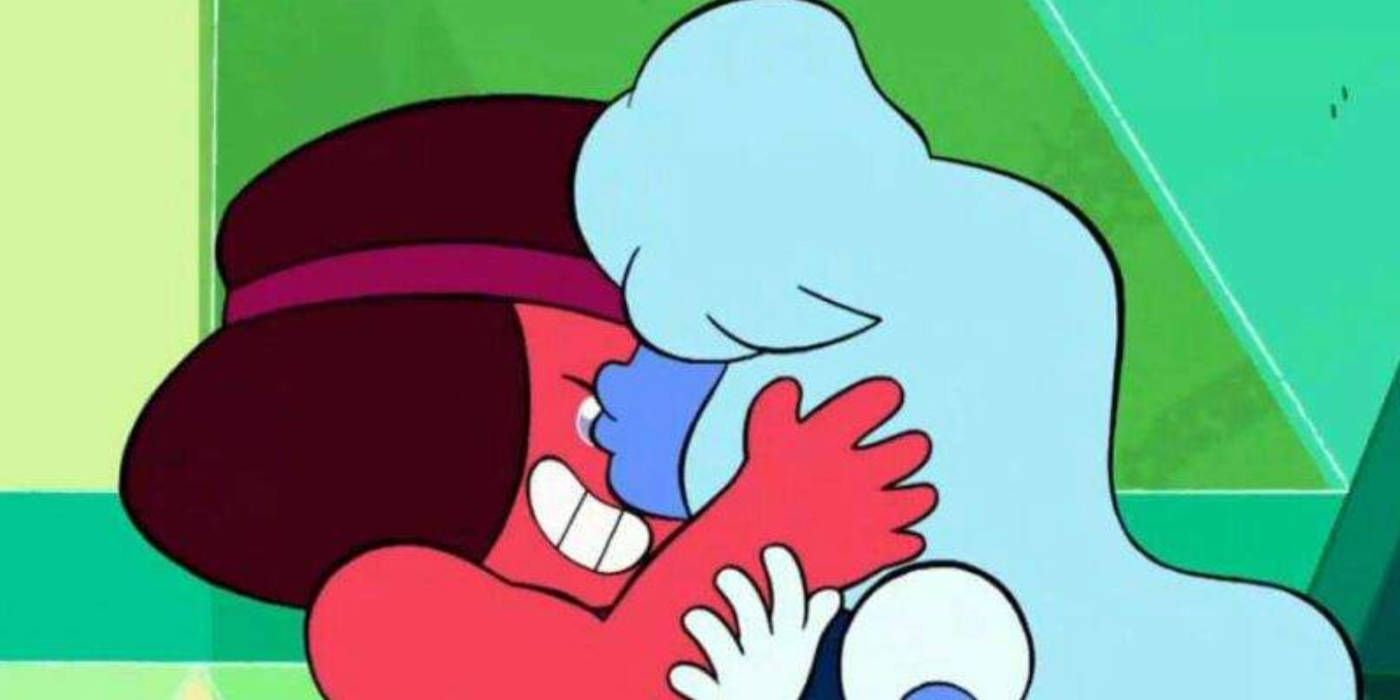
Steven Universe also introduced romantic couples that showed not every relationship had to be between a man and a woman, a rarity for cartoon shows at the time. The character Pearl is revealed to have been deeply in love with Steven’s mother Rose Quartz, which is an internal conflict that is explored throughout the show. Pearl later struck up a romantic flirtation in Steven Universe with a mystery girl. Steven Universe also introduced the characters of Ruby and Saphire, two female coded Gems who fell in love and fused to form Garnet. Garnet was perhaps the strongest and wisest Crystal Gem because the love of Ruby and Saphire fueled her power. The two Gems eventually married in Steven Universe season 5, episode 23, “Reunited” in an episode that celebrated their love (which was sadly censored in some countries for being too queer). The show's multiple queer romances demonstrated that Steven Universe wanted to provide various LGBTQ+ relationships to root for, in order to demonstrate there is no one way for queer relationships to exist. LGBTQ+ Representation in popular media is extremely important and Steven Universe recognized that. Characters like Garnet and Pearl were vital to developing LGBTQ+ relationships in cartoons because they were main characters, which allowed the audience to empathize with their struggles and victories more easily.
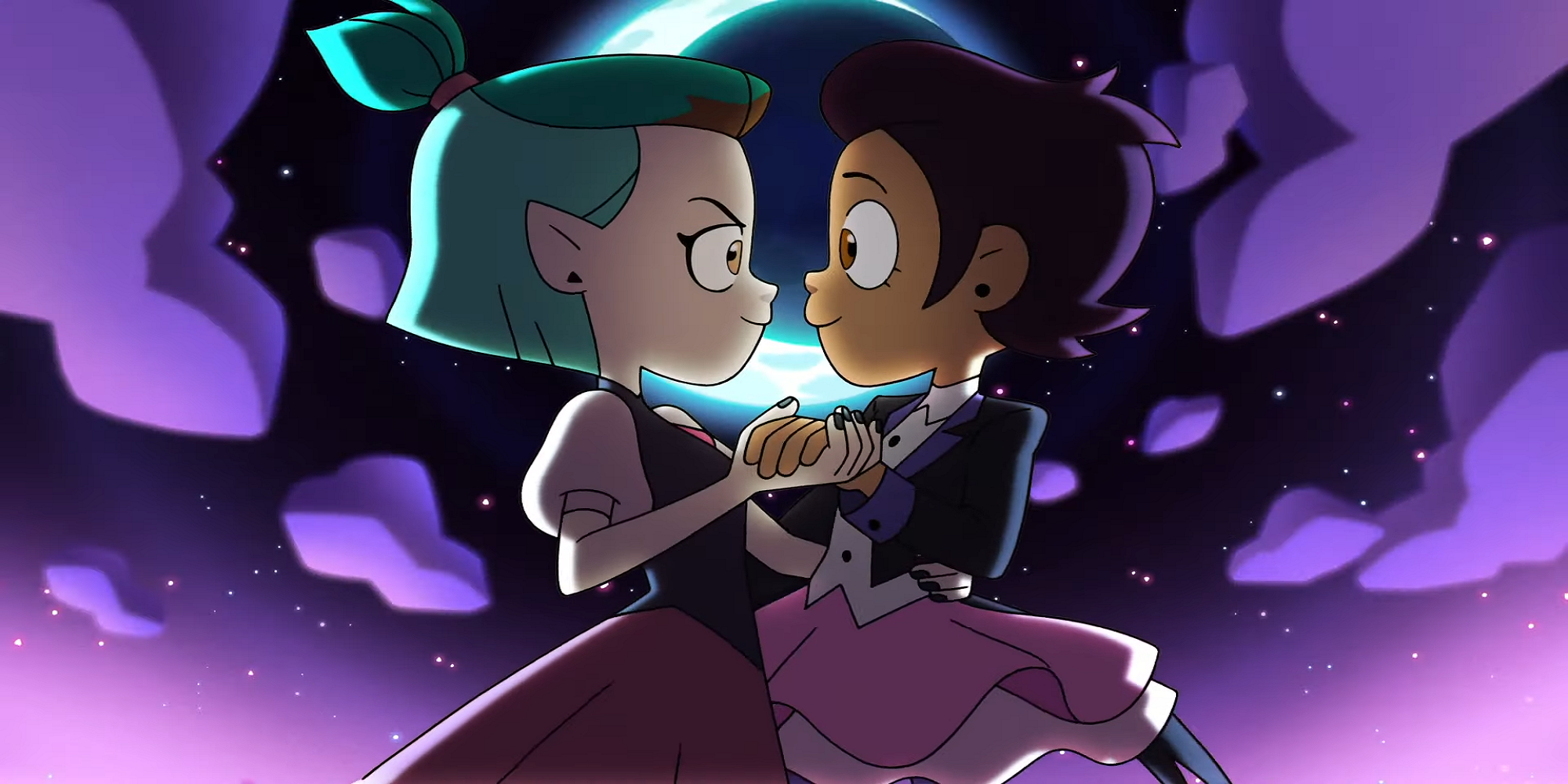
After Steven Universe aired, more positive queer representation began appearing across different cartoons. Adventure Time eventually canonized Princess Bubblegum and Marceline’s romantic relationship in the hour-long episode of Adventure Time: Distant Worlds entitled "Obsidian" which aired in 2020. Shows like The Owl House and She-Ra and The Princesses of Power began featuring main characters who were in queer relationships and started to feature non-binary characters in the cast. The show Arcane demonstrated how adding LGBTQ+ representation can actually help fix the worst attributes of a beloved property. Although Steven Universe and Rebecca Sugar should not get all the credit for the representation present in these shows, Steven Universe paved the way so that these shows would not have to fight so hard to prove that LGBTQ+ relationships were worthy of representation in cartoons. Any executive who suggested not greenlighting a cartoon show that heavily featured LGBTQ+ characters because it wouldn't find an audience can now be easily proven wrong by using Steven Universe and it's popularity to demonstrate that LGBTQ+ representation in cartoons can succeed.
Of course, Steven Universe’s representation is not perfect. Their non-binary representation could have been more explicitly and frequently featured and there were not many male-centric queer relationships present on the show beyond the romance between the minor characters Mr. Smiley and Mr. Frowney However, considering where the Steven Universe pilot began and how unaccepting and hostile cartoons were regarding queer representation before Steven Universe, the show's portrayal of LGBTQ+ characters as actual characters rather than shallow jokes was revolutionary. Steven Universe featured main characters whose gender identity and sexuality could not be ignored or mocked indefinitely. Steven Universe's flaws and criticisms should not be ignored, but neither should the fact that it made queer characters in cartoons more than just the butt of the joke. Steven Universe made LGBTQ+ characters heroes in their own right because they were authentic to themselves.
Want more LGBTQ+ Content? Check out our essential reading below...
- Stranger Things' Will Mystery Hurts Its Perfect Robin Story
- A Secret 90s LGBTQ+ Nickelodeon Character Helped Make A Great First Step
- Doctor Who's Next Era Can Be Truly LGBTQ+ Friendly
- How Power Rangers Can Fix Its Biggest LGBTQ+ Mistake
- Netflix's Live-Action Last Airbender Can Do What Korra Couldn't
- Percy Jackson Is Disney’s Best Chance To Fix Their LGBTQ+ Representation
- DC Vs. Marvel Who Is Better At LGBTQ+ Representation In Movies?
- LGBTQ+ High School Dramas Still Make 1 Major Mistake
- The MCU's X-Men Can Fix Marvels Representation Problem
- Why The Owl House Season 2 Is The Next Step For LGBTQ+ Animation
- Star Wars' New Novel Shows How Bad The Movies Fail At LGBTQ+ Representation
- Is Priya Queer? Turning Red May Have Pixar's 2nd LGBTQ+ Character
- Disney Needs To Properly Fix Its LGBTQ+ Mistakes In All Franchises
- Star Wars Is Fixing Rise Of Skywalker's LGBTQ+ Mistake
- Frozen 3 Should Make Elsa's LGBTQ Identity Canon (But Not With A Partner)
- Star Trek: A Queer History Of The Franchise
- Best LGBTQ+ TV Shows On HBO Max Right Now
- Best LGBTQ+ TV Shows On Hulu Right Now
- Best LGBTQ+ Movies On Disney+ Right Now
- Best LGBTQ+ TV Shows On Amazon Prime Right Now
- Best LGBTQ+ Movies On Amazon Prime Right Now
- Best LGBTQ TV Shows On Netflix Right Now
- Best LGBTQ+ Movies On Netflix Right Now
Comments
Post a Comment