
Quite a few indie tabletop gaming companies get their start by publishing campaign setting sourcebooks, and dungeon modules designed for Dungeons & Dragons fifth edition (to be more precise, designed for the free, open-source D&D 5e System Reference Document). Some indie tabletop game designers take a different approach by publishing system-agnostic sourcebooks - troves of world-building, lore, non-player characters, maps, and quests designed to be broadly compatible with any tabletop RPG set in the dungeon-crawling heroic fantasy genre so iconic to D&D. The following sourcebooks are particularly worth checking out thanks to their very creative world settings and detailed presentations of people, creatures, and adventures.
Third-party published content for Dungeons & Dragons first became legally possible with the release of the first System Reference Document for the Dungeons & Dragons 3.5 edition rules back in 2003. Developers at Wizards of the Coast released this basic package of game rules in order to make D&D 3.5e more accessible to novice tabletop gamers while also encouraging smaller-scale publishers to create content compatible with D&D rulebooks and campaign settings. In the decades to come, SRDs for 3e, 4e, and 5e D&D inspired libraries of campaign modules, custom classes, and dungeon-crawling scenarios made by indie developers; a few ground-breaking original tabletop RPGs like Pathfinder or the super-heroic Mutants & Masterminds were even built around the D20 ruleset core to D&D.
The sourcebooks listed below aren't built around the SRD of fifth edition Dungeons & Dragons adventures, or indeed any particular tabletop roleplaying game system. At the same time, these sourcebooks are soaked in the ambiance of classic heroic fantasy RPGs, painting vivid pictures of wild, untamed worlds filled with vast stretches of wilderness, awe-inspiring supernatural creatures, and the ruins of civilizations with a richness of culture and history. These sourcebooks can easily be used with the rules for Dungeons & Dragons fifth edition, Pathfinder second edition, the beginner-friendly fantasy RPG Quest, or any other roleplaying game about going out and having an adventure.

Skyrealms, currently in the process of being funded on Kickstarter, is a self-described "system-neutral fantasy sourcebook" with 48 pages of creatures, mini-dungeons, spells, items, and magic locations devised by game designer Iko for D&D-style fantasy campaigns. It also happens to be a coloring book for adults with intricately detailed line images of Emobeasts, Furlings, Crystal Slugs, Lostronauts, and other surreal creatures drawn by illustrator Evlyn Moreau. The setting of Skyrealms, true to title and theme, is a vista of floating islands, eccentric characters, and strange secrets of "Color Magic" that characters can master during their adventures, adding narrative weight to the colored pencils and/or crayons players doodle with while illuminating the sourcebook's imagery.

The Dark Of Hot Springs Island is a hexcrawl compendium made by Swordfish Islands, a publisher of campaign modules, RPG zines, and sourcebooks like Beyond The Borderlands, inspired by classic early Dungeons & Dragons module Keep On The Borderlands. Premise-wise, The Dark Of Hot Springs Island is centered around a detailed map of an island chain divided into hexagonal spaces used to help the Game Master craft an RPG story. As the players' characters travel around this island, the Game Master is able to consult the sourcebook to see what sort of creatures, ruins, secrets, or treasures occupy each of the map's hexes. The setting of The Dark Of Hot Springs Island is particularly imaginative and vivid, providing Game Masters with resources such as dense descriptions and illustrations of strange creatures, Elvish ruins, cursed items, and vegetation along with biographical notes on the squabbling factions and major NPCs who seek to control the precious resources of Hot Springs Island.
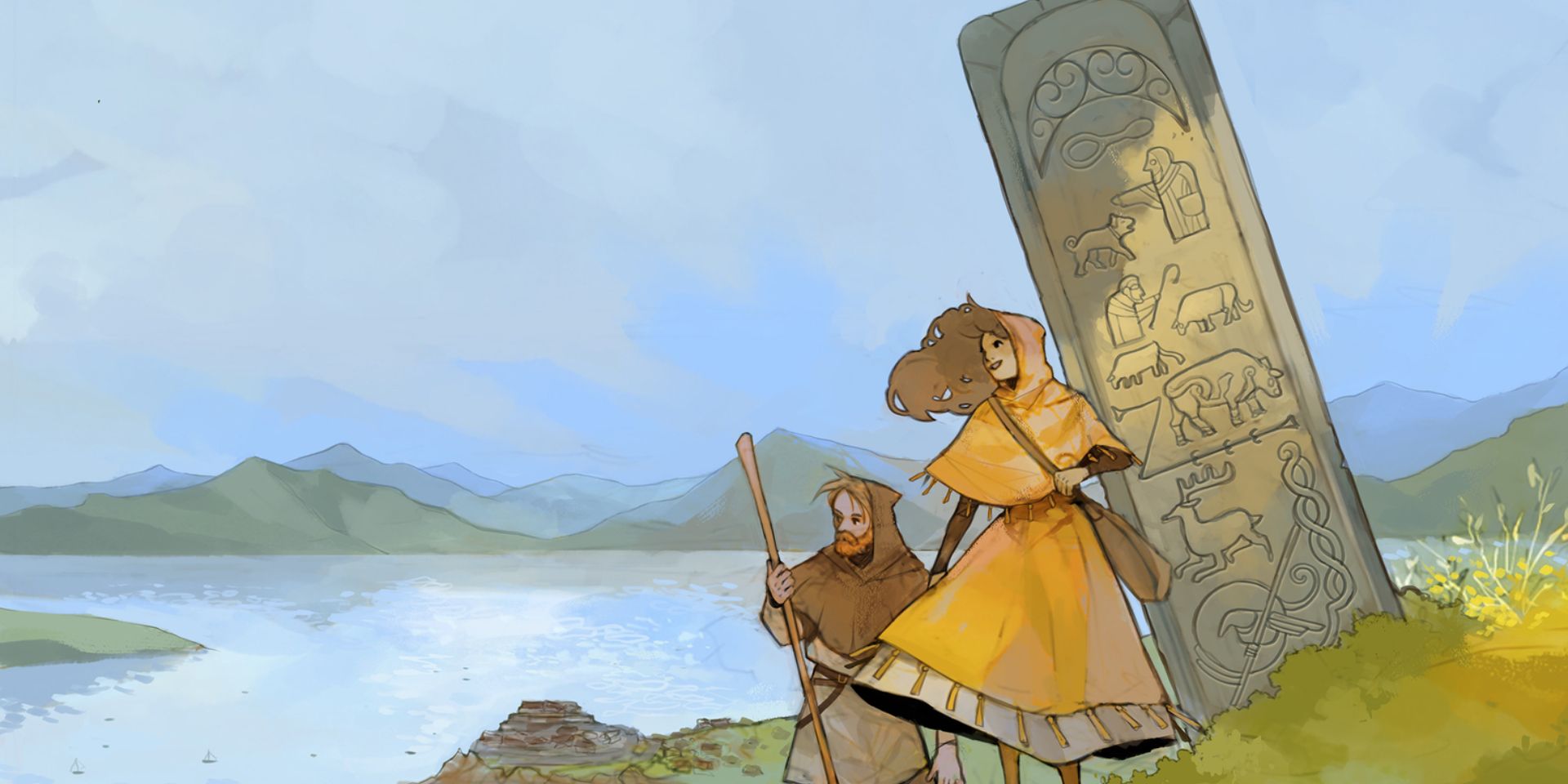
Carved In Stone, though an RPG sourcebook, isn't about a more traditional D&D-style fantasy world like the Forgotten Realms. Rather, it's a resource meant to take modern players back in time to the landscape of seventh century Scotland, populated by cultures of Pictish people striving to find their own identity in the wake of the Roman Empire's departure from Great Britain and the migration of invasive peoples like the Anglo-Saxons. In many ways, Carved In Stone, as a Kickstarter-funded RPG setting guide, is meant to refute the stereotype of blue-painted, kilt-wearing Scottish bruisers popularized by films such as Braveheart, instead using clear descriptions and colorful illustrations to delve into the mundanity and spectacle of actual Late Antiquity Scotland.
The complete Carved In Stone book will shine a light on the stories, art, diets, clothing, towns, livestock, wild game, and beliefs of the common Pict - in other words, it's RPG content about communities as well as great kings, queens, and heroes. The title Carved In Stone itself refers to the standing stones used to mark boundaries and travel routes in ancient Scotland - pillars frequently carved with icons, illustrations, and inscriptions of Ogham script.

The system-agnostic RPG zine bundle called A Thousand Thousand Islands is compatible with Dungeons & Dragons, Pathfinder, and nearly every other heroic fantasy tabletop RPG system, but has a setting that lets it stand apart in many ways from the Western Fantasy worlds popularized by D&D. Each individual zine in the A Thousand Thousand Islands bundle was written by a Southeast Asian tabletop game creator and describes a different facet of a fantasy island archipelago inspired by the cultures, histories, and myths of Southeast Island nations such as Malaysia, Indonesia, and the Philippines. The meat of this A Thousand Thousand Islands zine is eight setting booklets each describing a different fictional location – a "river kingdom of ruins and crocodiles" called MR-KR-GR, a "maritime nation of teak knights and living ships" called Korvu, and so on. Supplementary appendices in this zine give Game Masters extra resources they can draw on to flesh out this Southeast Asian fantasy setting – bestiaries of animals and plants, collections of art, and even collections of essays and tales about the Hantu, monsters frequently mentioned in real-life Malaysian folklore.
Sources: Skyrealms/Kickstarter, Swordfish Islands, Carved In Stone/Kickstarter, A Thousand Thousand Islands
Comments
Post a Comment