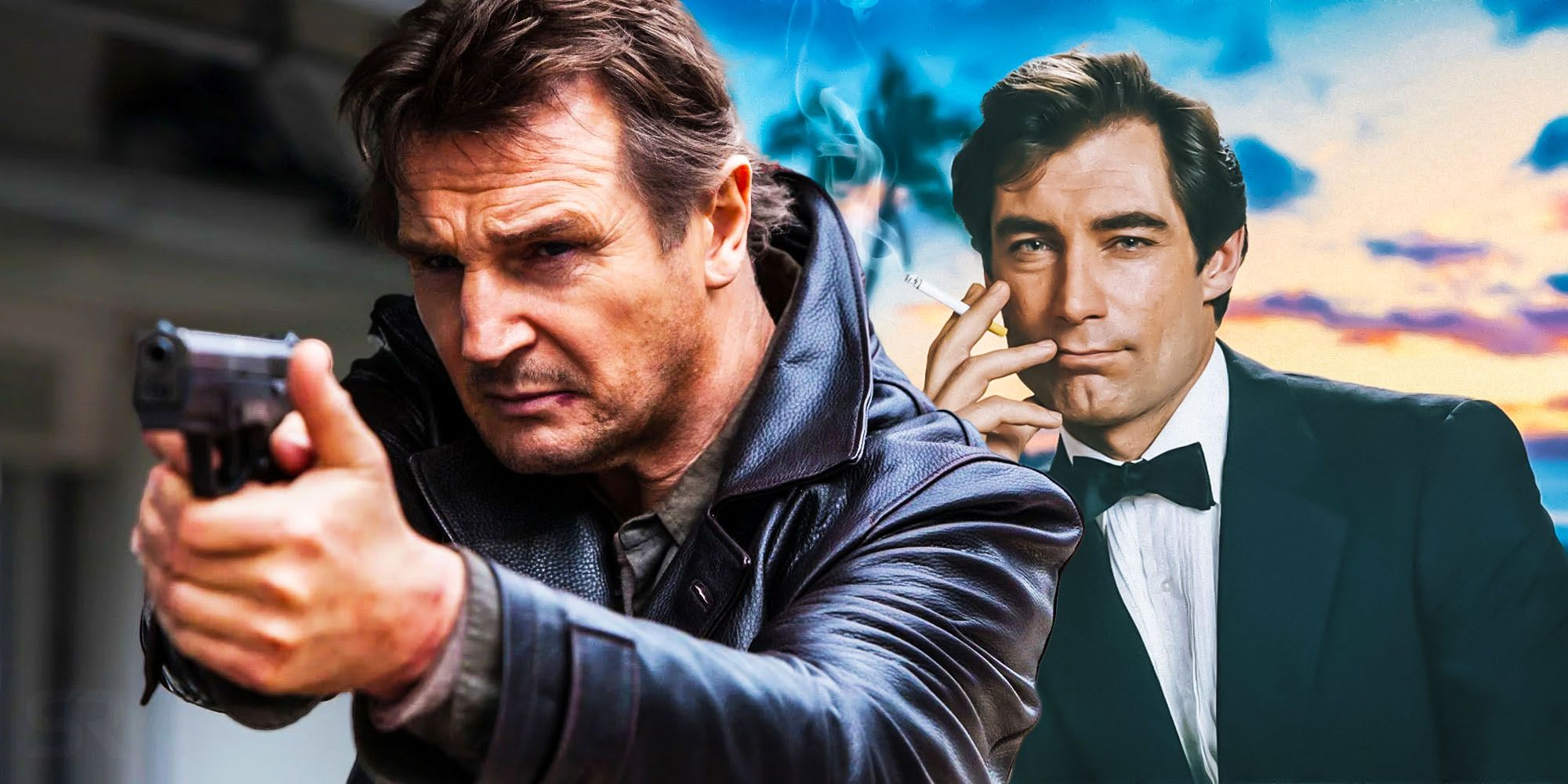
Sony's Failed Bid To Launch A Rival James Bond Movie Series Explained

Sony once planned to make a rival James Bond movie franchise - here's why those plans came to nothing. James Bond made his cinematic debut in 1962's Dr. No, with Sean Connery's Bond becoming instantly iconic. Connery's star power combined with the franchise's blend of action, glamor and gadgets made it the first real movie franchise, which has been running for 60 years and counting. Connery famously fell out of love with both the character and the producers behind the series and exited following 1967's You Only Live Twice (which changed a lot from the novel).

In the years that followed, actors like Roger Moore, Pierce Brosnan and Daniel Craig - who ended his run with 2021's No Time To Die - have put that mark on the role. While James Bond movies can vary wildly in quality, from the superb The Spy Who Loved Me to the lambasted Die Another Day, the series has always been able to reinvent itself for a new generation. The EON-produced Bond movies are considered canon, though there are two other 007 adventures in existence; 1967 James Bond parody Casino Royale starring David Niven and Peter Sellers and 1983's Never Say Never Again.

Related: James Bond 26 Needs To Bring Back The Franchise’s Best Villain Twist

Following the success of the James Bond movie series, there have been several high-profile lawsuits over the property. The most well-known involves the book Thunderball, which author Ian Fleming originally developed as a screenplay with the intent of making it the first Bond movie. He later adapted that script into a novel, leading to a lawsuit by writers Jack Whittingham and Kevin McClory, who developed the project with the author. The lawsuit was settled out of court, awarding McClory screenplay rights to Thunderball, its story and characters. This led to him co-producing the 1965 adaptation and later remaking it with Never Say Never Again. In the late 1990s, he struck a deal with Sony to remake Thunderball again, and combined with owning the rights to Casino Royale, Sony planned to launch their own rival James Bond movie franchise.
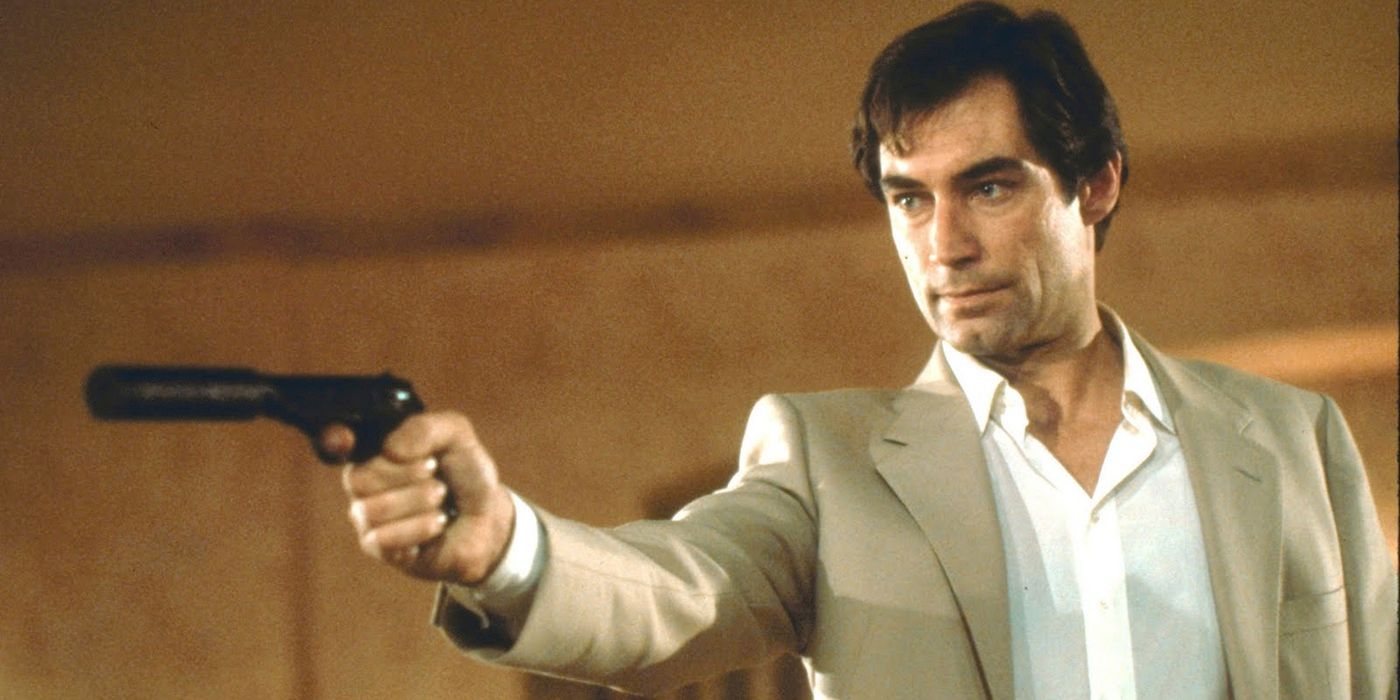
This Sony Bond had the working title Warhead 2000 AD, with Sean Connery reportedly being considered as the villain while Timothy Dalton (whose best Bond is License To Kill) and Liam Neeson were approached about playing 007. Of course, MGM was not happy with Sony's plan and launched a lawsuit. Sony fired back, stating that owning Casino Royale and Thunderball rights gave them the option to produce new Bond series. They also claimed that McClory helped establish the big screen Bond series, and was thus entitled to a share of royalties from EON's past productions, with the most recent entry at that stage being 1997's Tomorrow Never Dies.

This legal wrangling caused pre-production on Sony's Warhead 2000 AD to shut down, and a settlement between Sony and MGM was agreed in 1999. The former gave up any rights to make a James Bond movie and they traded MGM the rights to Casino Royale - which became one of Craig's best - for Spider-Man. In the aftermath, McClory was left to fight his royalty claim alone, which was thrown out, as it was decided he had waited too long to mount it. Sony's plan to produce a rival Bond franchise didn't work out, though they later tried to create a new spy saga with xXx. This 2002 action-adventure stated that James Bond was out of touch in the new millennium, though xXx lost the box-office race to Die Another Day, Pierce Brosnan's final 007 outing.

Next: The Original Version Of xXx 2 Was A Buddy Movie Between Vin Diesel & Ice Cube


Comments

Popular posts from this blog

CBS' Ghosts: Every Main Ghost Time Period & Backstory Explained

One of CBS' newest sitcoms,  Ghosts , features a cast full of spectral characters that each hail from a distinct time period and come with their own unique backstory and death. Though each of the eight ghosts has a wildly different perspective based on their different experiences throughout history, they nonetheless form a sort of family, which is one of the show's greatest charms. After all, being stuck with the same people for all of eternity allows for plenty of time to get to know each other. Ghosts , which is an adaptation of a BBC show of the same name, stars Utkarsh Ambudkar and Rose McIver (who played Liv Moore on five seasons of  iZombie ) as Jay and Sam, a young couple who inherit a mansion in upstate New York. To their surprise, however, the house also comes with several ghostly inhabitants, who Sam is able to see after a near-death experience. These are Thorfinn (Devan Long), Sasappis (Román Zaragoza), Isaac (Brandon Scott Jones), Hetty (Rebecca Wisocky...

The Hateful Eight's Original Ending Explained (& Why Tarantino Changed It)

The Hateful Eight has an ending full of blood and betrayal, as expected from any Quentin Tarantino movie, but this wasn’t the original ending – here’s why he changed it. Tarantino has explored different genres throughout his career; though he’s best known for his crime movies like Reservoir Dogs and Pulp Fiction , he's also visited genres like martial arts (with both Kill Bill  films) and black comedy ( Once Upon a Time in Hollywood ). In addition, he's shared his version of westerns with Django Unchained and The Hateful Eight , with the latter going through some problems and creative changes even before it began shooting. Set in 1870, Tarantino's The  Hateful Eight follows eight strangers, all with different (and secret) motivations, who end up in a stagecoach lodge after seeking refuge from a blizzard. These characters are Major Marquis Warren (Samuel L. Jackson), John “The Hangman” Ruth (Kurt Russell), Daisy Domergue (Jennifer Jason Leigh), Chris Mannix (Walton Gog...

Why Spider-Man 3's Uncle Ben Retcon Doesn't Change Peter's Origin

Sam Raimi’s Spider-Man 3 is often criticized for a major retcon made to Uncle Ben’s death , but this retcon ultimately doesn’t change Peter Parker’s classic origin story. Raimi’s third film in the iconic Spider-Man trilogy is often criticized, perhaps unfairly. While the film suffers from too many character arcs and plot threads and would have been better as two or three separate films, it does a more than adequate job adapting the Spider-Man comics and telling a sincere story about relatable, flawed, characters who are intertwined with the extraordinary, just as Stan Lee and Steve Ditko intended when co-creating the character. Uncle Ben’s retconned death may alter classic elements from the comic version, but it retains its most important aspects in regards to Peter’s characterization. 2002’s Spider-Man is, for much of the film’s first half, a faithful adaptation of Spider-Man’s 1962 origin story in issue 15 of the Amazing Fantasy comics. An awkward social pariah, Pete...