
Game of Thrones completely changed the storylines of two different characters from the books, which unintentionally caused an odd Stark family coincidence. When adapting the books for the HBO series, Game of Thrones notably left out significant characters, giving their storylines to other characters or new figures. While certain cut Game of Thrones book characters like Young Griff, Lady Stoneheart, Arianne Martell, and Jon Connington changed major aspects of Game of Thrones’ story, two notable characters with the same name were coincidentally cut from House Stark’s larger story.
The overall journey of House Stark in Game of Thrones remained relatively unchanged in Game of Thrones’ adaptation to the screen, but certain deleted characters introduced far more tragic circumstances for the main Stark children. When Robb Stark’s wife became Talisa Maegyr, the shocking season 3 Red Wedding became all the more brutal when she was stabbed in her pregnant stomach. The most significant omission of another character changed the stories of both Arya and Sansa Stark attempting to hide their identities in Westeros, with both of the biggest missing House Stark characters sharing an odd similarity.
One of the first major changes to Game of Thrones’ story was the HBO series leaving out Jeyne Pool, Sansa’s best friend who traveled with her to King’s Landing because her father was the steward of Winterfell. Jeyne Pool was cut from Game of Thrones, which also meant erasing the storyline where she is smuggled out of King’s Landing and given to Petyr Baelish, who poses her as Arya Stark after Arya was assumed dead. Jeyne is then married to Ramsay Bolton as Fake Arya in order to seal an alliance with the Boltons, with this storyline being taken over by Sansa in Game of Thrones season 5, who is still in the Vale in the books. The next most important cut character for the Stark story, Robb Stark’s wife, shares an odd coincidence with the former, as both are named Jeyne and happen to be the only Jeynes significant to Game of Thones’ plot.
When writing Robb’s wife, Jeyne Westerling, into the series, Game of Thrones completely upended her character, renaming her Talisa Maegyr as a Volantene noblewoman rather than a girl from an impoverished house serving House Lannister. The Jeynes weren’t connected by anything other than their close relationship to the Stark storylines, but it’s odd that two of the most significant Game of Thrones characters that Benioff and Weiss chose to change shared the same name. The replacement of Jeyne Westerling's character was already in motion during the production of Game of Thrones season 2, but changing her name was suggested by writer George R.R. Martin, who revealed at Worldcon 2012 that it would cause too much confusion to keep her name as Jeyne when her story was so different.
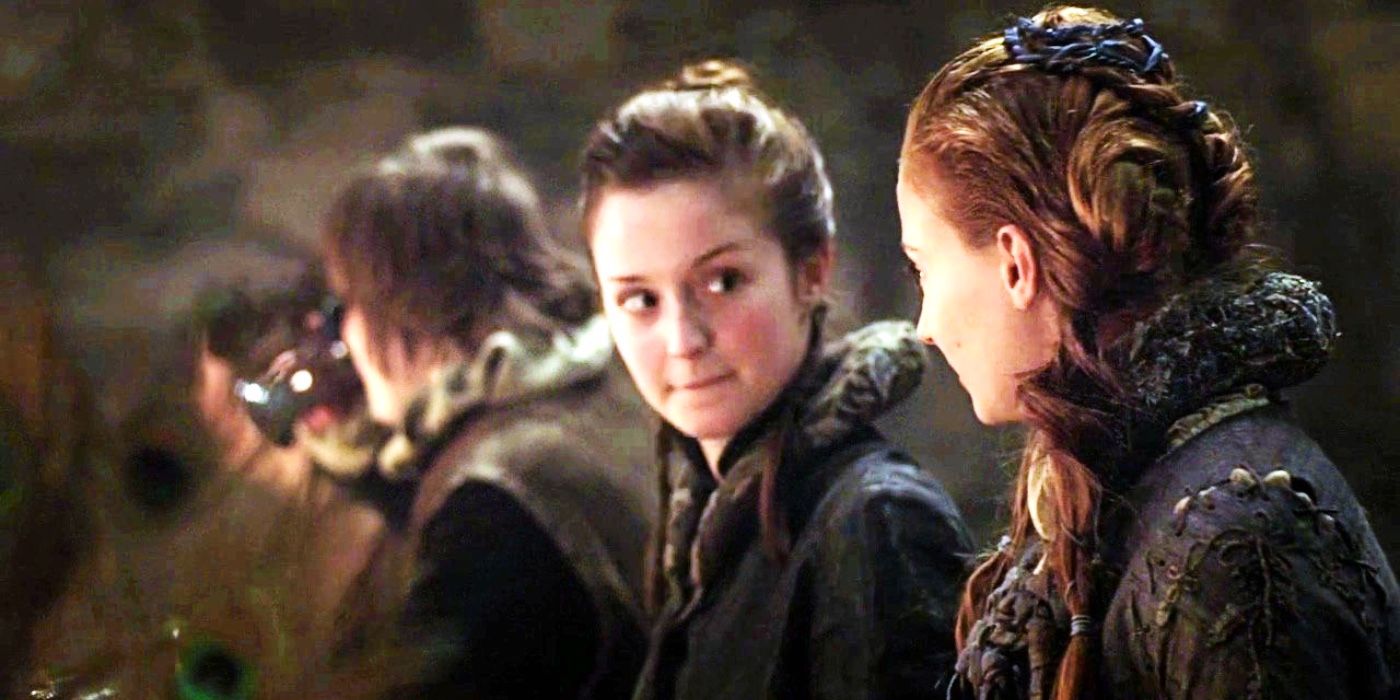
While Jeyne Westerling was completely erased in Game of Thrones, Jeyne Poole actually does make one appearance in Game of Thrones’ season 1 pilot in which she sits next to Sansa at the feast. She isn’t named, but Benioff and Weiss revealed in the episode’s commentary that Sansa’s friend is, in fact, Jeyne Poole. While Martin tried to include Poole again, Benioff and Weiss decided that they wanted Sansa Stark to be a much more prominent character with her tragic storyline, which meant cutting Jeyne Poole and having the future Queen in the North take over the Ramsay plotline. When considering that the majority of significant Stark characters remained in HBO’s Game of Thrones adaptation, it’s still a weird coincidence that the two Jeynes were so notably changed.
Comments
Post a Comment