
Why The Original Resident Evil Movie Didn't Adapt The Games

While it seemed like the obvious route, here's why the original Resident Evil movie didn't actually adapt any of the video games. Since the Resident Evil games debuted in 1996, the franchise has been spin-off in just about every medium. The first movie arrived in 2002 and spawned five direct sequels and a 2021 reboot debuted Resident Evil: Welcome To Raccoon City. The property has also received three animated films, a Netflix animated series and an upcoming live-action Resident Evil show starring Lance Reddick as Wesker.

Each part of the Resident Evil universe feels like its own unique beast, with the Milla Jovovich movies having few links to the games outside of some characters and creatures. Welcome To Raccoon City tried to appease fans of the games who were left cold by past movies by adapting the first and second games together. Unfortunately, this resulted in a crowded narrative with too many characters and subplots; the reboot's modest budget also resulted in some subpar CGI.

Related: The Monster That Must Finally Debut In Netflix's Resident Evil

Famously, the late, great George A. Romero nearly helmed the original Resident Evil film. The rights to the first game were purchased by a company named Constantin Film, who felt a Resident Evil movie adaptation should be relatively simple to put together. However, according to a Fangoria #211 article titled "Resident Evil: Girls, Guns and Ghouls," (via Resident Evil Wiki) company head Robert Kulzer felt the release of the second game in 1998 would make a straight adaptation of the original title look "... really dated and boring." After developing scripts with screenwriter Alan McElroy and Romero, Constantin nearly let the option to produce Resident Evil expire before they connected with director Paul W.S. Anderson.
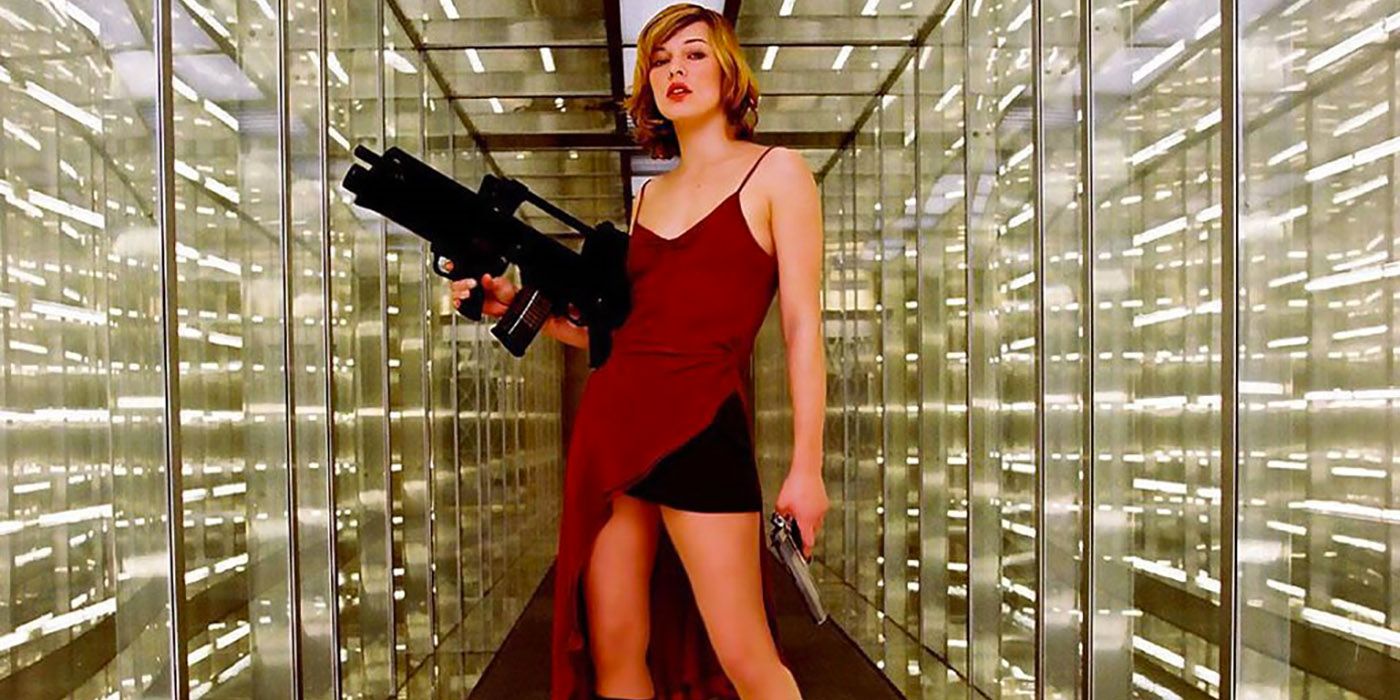
Having previously helmed Mortal Kombat and Event Horizon, Anderson seemed like the natural pick. He had also become a huge fan of the games and had tried to get the rights before learning Constantin had acquired them already. Anderson later developed a screenplay titled Undead, which he describes as "... very much a ripoff of Resident Evil," with an aim to either make it an original project or tweak it to be a Resident Evil movie (which won't be connected to the show) if the Romero version didn't happen.

After Romero exited Resident Evil, Anderson signed on to the movie and Undead - which again, borrowed elements from the games without being a straight adaption - was reworked. By the time the film went into production, the first three games and Dreamcast sequel Code: Veronica had already been released, so it's odd Constantin felt it would be "boring" to adapt the original or any of the others. Considering the success the film series met with general audiences, however, maybe Kulzer had a point.

Next: Netflix's Resident Evil Is Making The Same Mistake The Milla Jovovich Movies Did


Comments

Popular posts from this blog

CBS' Ghosts: Every Main Ghost Time Period & Backstory Explained

One of CBS' newest sitcoms,  Ghosts , features a cast full of spectral characters that each hail from a distinct time period and come with their own unique backstory and death. Though each of the eight ghosts has a wildly different perspective based on their different experiences throughout history, they nonetheless form a sort of family, which is one of the show's greatest charms. After all, being stuck with the same people for all of eternity allows for plenty of time to get to know each other. Ghosts , which is an adaptation of a BBC show of the same name, stars Utkarsh Ambudkar and Rose McIver (who played Liv Moore on five seasons of  iZombie ) as Jay and Sam, a young couple who inherit a mansion in upstate New York. To their surprise, however, the house also comes with several ghostly inhabitants, who Sam is able to see after a near-death experience. These are Thorfinn (Devan Long), Sasappis (Román Zaragoza), Isaac (Brandon Scott Jones), Hetty (Rebecca Wisocky...

The Hateful Eight's Original Ending Explained (& Why Tarantino Changed It)

The Hateful Eight has an ending full of blood and betrayal, as expected from any Quentin Tarantino movie, but this wasn’t the original ending – here’s why he changed it. Tarantino has explored different genres throughout his career; though he’s best known for his crime movies like Reservoir Dogs and Pulp Fiction , he's also visited genres like martial arts (with both Kill Bill  films) and black comedy ( Once Upon a Time in Hollywood ). In addition, he's shared his version of westerns with Django Unchained and The Hateful Eight , with the latter going through some problems and creative changes even before it began shooting. Set in 1870, Tarantino's The  Hateful Eight follows eight strangers, all with different (and secret) motivations, who end up in a stagecoach lodge after seeking refuge from a blizzard. These characters are Major Marquis Warren (Samuel L. Jackson), John “The Hangman” Ruth (Kurt Russell), Daisy Domergue (Jennifer Jason Leigh), Chris Mannix (Walton Gog...

Why Spider-Man 3's Uncle Ben Retcon Doesn't Change Peter's Origin

Sam Raimi’s Spider-Man 3 is often criticized for a major retcon made to Uncle Ben’s death , but this retcon ultimately doesn’t change Peter Parker’s classic origin story. Raimi’s third film in the iconic Spider-Man trilogy is often criticized, perhaps unfairly. While the film suffers from too many character arcs and plot threads and would have been better as two or three separate films, it does a more than adequate job adapting the Spider-Man comics and telling a sincere story about relatable, flawed, characters who are intertwined with the extraordinary, just as Stan Lee and Steve Ditko intended when co-creating the character. Uncle Ben’s retconned death may alter classic elements from the comic version, but it retains its most important aspects in regards to Peter’s characterization. 2002’s Spider-Man is, for much of the film’s first half, a faithful adaptation of Spider-Man’s 1962 origin story in issue 15 of the Amazing Fantasy comics. An awkward social pariah, Pete...