Warning! Spoilers ahead for Choujin X chapter 21!
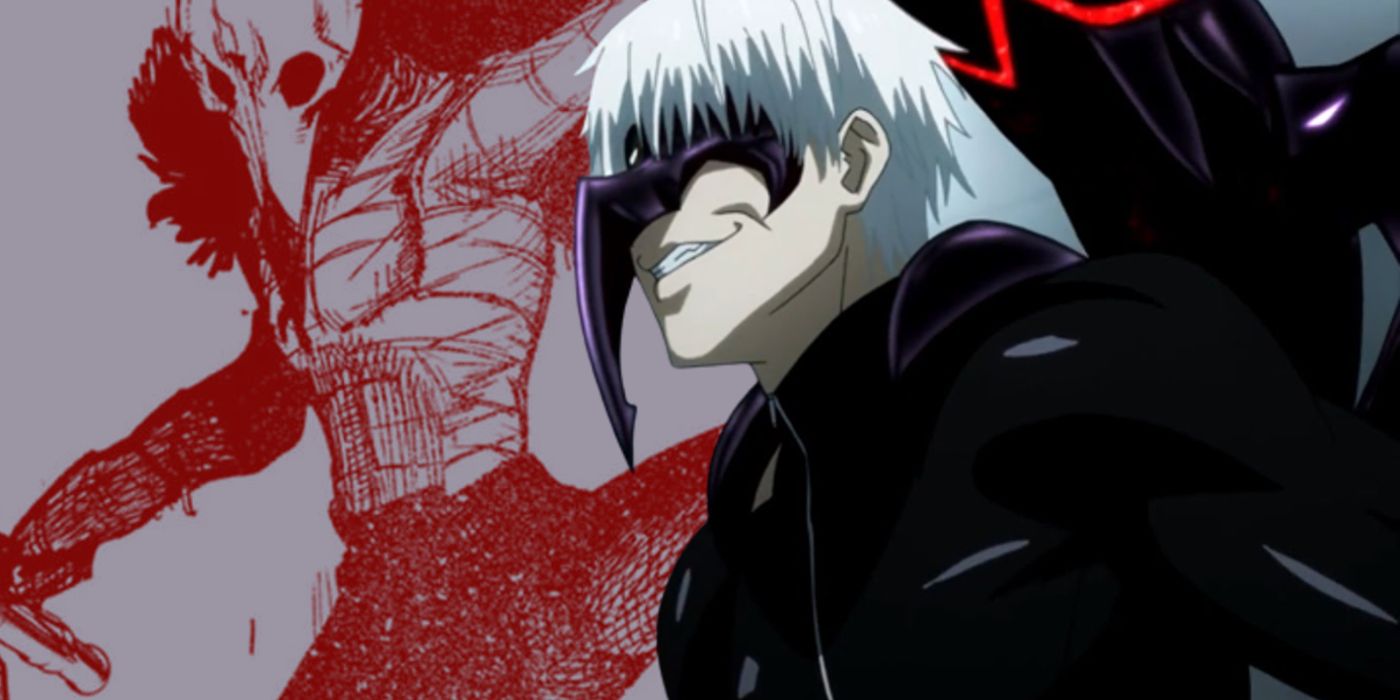
Why Ken Kaneki's kagune manifests as a centipede (especially when he becomes a kakuja) in mangaka Sui Ishida's Tokyo Ghoul is similar to why the Beast Chouin Tokio Kurohara's Beastification takes the form of a vulture in Ishida's new manga Choujin X.
In his earlier and critically acclaimed manga series Tokyo Ghoul, one of the most defining features that Ishida gave his eponymous monsters was the predatory organ known as the kagune. But rather than making them even more special than they already were by explaining why certain kagune took certain forms in relation to the user, he severely limited kagune to only four types (essentially based on what part of the body they grew out of). The main exception was, of course, Kaneki who eventually grew a centipede-esque kagune, in addition to the one he obtained from the ghoul Rize, after Tokyo Ghoul's Aogiri Tree member Yamori tortured him with such an insect.
In Choujin X, however, Ishida is clearly expanding upon the inherent complexities of Kaneki's centipede kagune with Tokio's Beastification form - and possibly Azuma Higashi's own, though his latest transformation in chapter 21 seems to contradict this. Earlier chapters of Choujin X explain why Tokio turns into a vulture-like creature. As a kid, his classmates referred to him as a buzzard because of how he would always hang around and benefit from his friendship with the highly popular Azuma whose status as a minor superhero led to some exciting encounters. Even Tokio's power as a Choujin seems to stem from that friendship's dynamic. Recent chapters also heavily implied that Azuma's own Choujin powers were similar because, like how Tokio could speak with vultures, Azuma understood a hyena, though, the manga has never explained why.

With Choujin X, Ishida is clearly expanding upon and normalizing Kaneki's centipede kagune which was already an anomaly in Tokyo Ghoul for personalizing what was normally an unindividualized predatory organ for most ghouls. The difference, however, is that Kaneki's centipede kagune is the aftereffect of a terrible experience that negatively impacted Kaneki's mental state. It's essentially a physical manifestation through supernatural means that captures the phenomenon where Kaneki becomes his own torturer Yamori by adopting his mannerisms, idiosyncrasies and, most importantly, his affinity for torturing others. The kagune is symbolic for the actual centipede Yamori would put in Kaneki's ear. Meanwhile, the Beastification forms in Choujin X derive from a place that's more heavily ingrained in the user's personality. Like vultures that stalk dying animals and feed off their rotting corpse, Tokio leeched off his friend Azuma. In fact, Tokio later learns that he's unstoppable when he's protecting someone he worships, an interesting twist on how buzzers "worship" the dying animals it will later feast upon when they die. If Azuma had actually turned into a hyena-like creature as fans originally believed, it would have added another layer to how he has a voracious appetite for power.
On top of Ishida clearly expanding upon Kaneki's centipede kagune in Tokyo Ghoul with his Beast Choujins, he's greatly diversifying the kinds of powers his superpowered beings can wield in his new manga, for there are Choujins that can shoot smoke from their feet like Fire Force's Shinra Kusakabe or create swords out of thin air. While it's unlikely that Choujin X will ever surpass Tokyo Ghoul in terms of popular, it's clear that its powers are much more imaginative.
The latest chapter of Choujin X is available in English now on Viz's official website!
Comments
Post a Comment