Warning! Spoilers ahead for Doctor Strange in the Multiverse of Madness
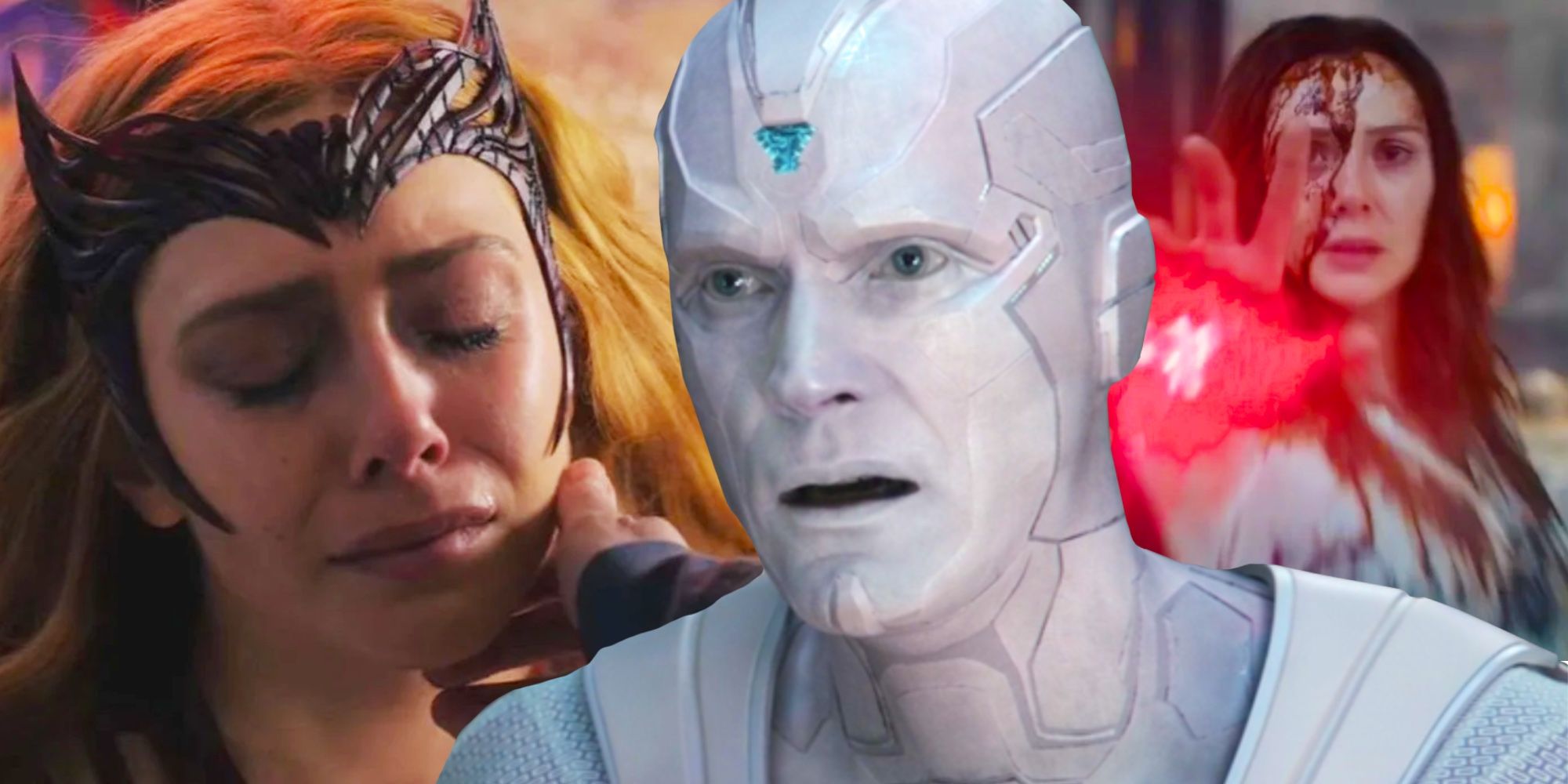
The biggest problem with Doctor Strange in the Multiverse Madness is the absence of Vision. While the synthezoid played by Paul Bettany in the MCU gave his life in Avengers: Infinity War, he made subsequent returns in WandaVision (albeit in different forms). Based on the important role the character played in the life of Wanda Maximoff (Elizabeth Olsen), some version of Vision should have made an appearance in Doctor Strange 2 as the Scarlet Witch became a borderline villain in her mission to rebuild her life.
In Doctor Strange 2, it was revealed that Wanda had been reading from the Darkhold, the Book of the Damned written by the Chaos God Chthon. Using the corruptive power of the book, the Scarlet Witch discovered the existence of young America Chavez and her power to travel the multiverse. Wanting to kill and take America's powers, Wanda hoped to travel to another universe to reunite with Billy and Tommy, the children she created when she took over the town of Westview and lost when she set the town free. However, she also created a version of the Vision. While the true Vision was rebuilt by SWORD (known as White Vision), he and Wanda didn't have any interactions after his memories were restored, flying off to process the information and soul he'd regained.
Considering how things were left in WandaVision, it's not a leap to presume that Wanda would have been just as interested in reuniting with Vision just as much as her children, setting up a new appearance of the synthezoid in Doctor Strange 2. Instead, Vision had no meaningful presence in the new MCU film, and Wanda herself was only interested in finding her boys. Essentially, Scarlet Witch's arc from WandaVision was reduced with her focus being purely on motherhood when her love of Vision and losing him was clearly just as important as losing her kids. Furthermore, the opportunity to have White Vision showing up to help bring Wanda back from the edge was wasted, something that would have given her an additional level of hope during her eventual redemption by the end of Doctor Strange 2.

Vision was only referenced three times in Doctor Strange 2. Wanda referenced his theories about the multiverse and his death in Infinity War, and he was seen briefly within the mindscape of Earth-838's Wanda. Clearly, Vision's presence should have been far greater. While having him included in Wanda's motivations would have been enough, so much more could have been done as well. The Vision of Earth-383 could have been seen protecting Billy and Tommy during the film's final confrontation. White Vision could have reunited with Wanda to offer a pathway towards greater redemption. There was quite literally a multiverse of opportunities. Even a flashback would have been a valuable addition to Wanda's arc compared to his inexplicable absence.
While Doctor Stange 2 featured several elements that work well, largely ignoring the love of Wanda's life was its biggest flaw. Considering what Scarlet Witch's arc should have been as it continued from WandaVision, Vision needed to play a much bigger role rather than being virtually non-existent. Wanda's sole focus was on her children when there was no reason she couldn't try to reunite with her entire family in the multiverse. The lack of Vision in Doctor Strange in the Multiverse of Madness demonstrates a confusing lack of "vision."
Comments
Post a Comment