The Conners: Jesse’s Return Perfectly Flipped A Sitcom Cliche

Although The Conners isn’t the most subversive sitcom out there, Joe Walsh’s return as Aldo’s father Jesse flipped a famous trope of the genre on its head. While some sitcoms, like Arrested Development and Community, mine most of their humor from spoofing the conventions of TV comedy, The Conners usually offers a more straightforward brand of humor. Like its predecessor Roseanne, The Conners' secret weapon is plots that are funny but rooted in real-life working-class issues ranging from job insecurity to the rising cost of higher education.

However, from time to time, The Conners mines big laughs out of parodying sitcom cliches. Usually, this occurs when one of the show’s more sincere characters, like Jackie or Mark, seems to be setting up a schmaltzy, sentimental moment only for a more sardonic character like Harris or Darlene to cut through the sweetness with a sharp one-liner. However, Joe Walsh’s return to The Conners saw the series take this idea further.

Related: The Conners Rushed Ben & Darlene’s Reunion

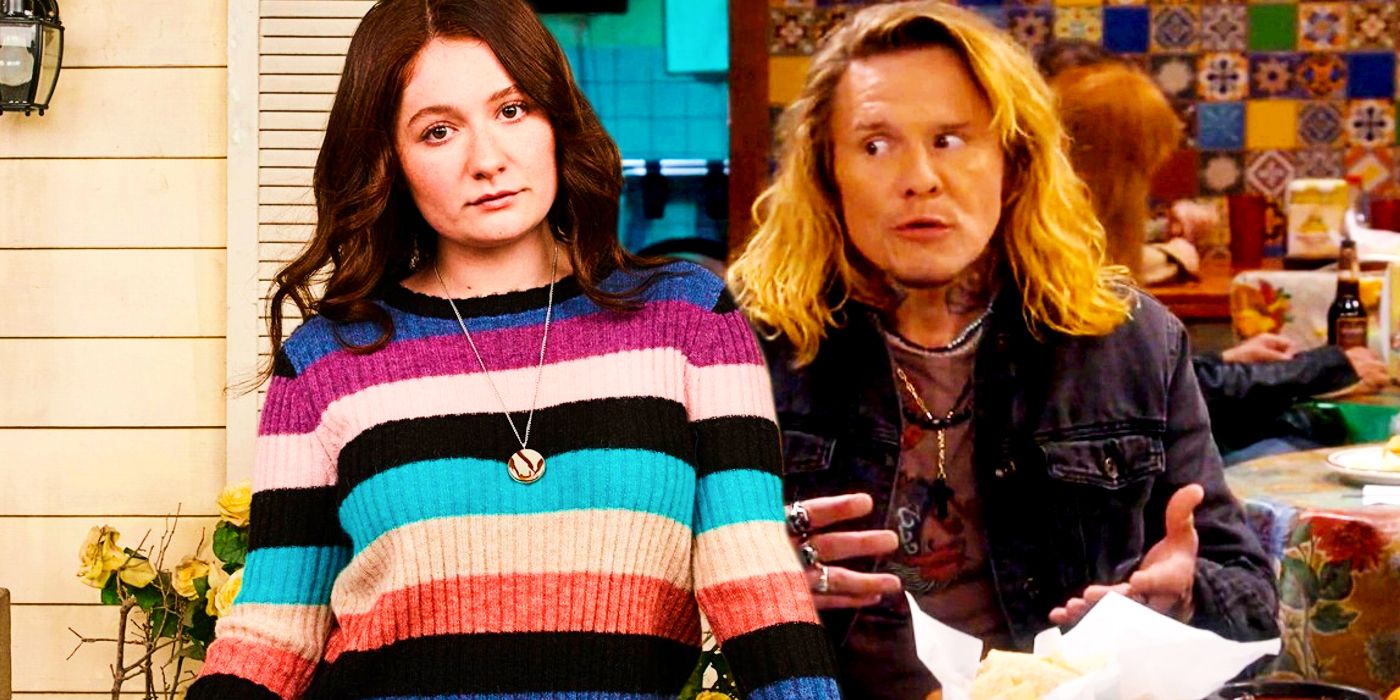
In  “Three Ring Circus” (season 4, episode 19),  Joe Walsh returned as Aldo’s father Jesse and, despite disapproving of his son’s proposed marriage to Harris, patched things up with his offspring. The episode focused on Harris’ Conners season 4 story as she once again told Louise, Becky, and Jesse that she intended to stay with Aldo despite their advice. However, one scene saw Jesse tell Aldo that he opposed his marriage to Harris  with “every fiber of my being” but then blessed the union anyway since he was “always proud of you, son — just not of what you're doing and who you are.” A bizarre, contradictory claim, the line was a clever deconstruction of the typical sweet Golden Moments featured on family sitcoms.

Jesse’s meaningless comment, and Aldo’s misplaced emotional reaction to it, underlined the difference between an unconventional, “dysfunctional” family like the Conners and a genuinely dysfunctional family like Aldo and Jesse’s. Even though earlier in The Conners season 4 plot, Harris defended her relationship with Aldo when Jesse told her to leave his son, Aldo instantly forgave his father because he seemingly wasn’t even aware that Jesse was actively insulting him. For his part, Jesse seemed equally unaware of the fact that his words weren't a sweet send-off for his son and were instead a cold condemnation of his conduct.

While it sometimes seems like the Conners don’t care about each other because of how often and relentlessly they make fun of each other, the family does try to see eye to eye and do respect each other even when they disagree. However, much like The Conners uncovered That 70s Show’s lax parenting, the sitcom's Jesse/Aldo scene underlined how hollow and meaningless a lot of sweet sitcom moments are when the father/son duo patched things up despite neither of them growing, changing, or improving in any way. The duo accepting their terrible relationship and treating their mutual disdain as if it was an achievement was an unusually dark sitcom subversion for The Conners, but it was an effective contrast to how the titular family constantly needle each other but ultimately have one another’s back, compared to Jesse and Aldo’s terrible setup.

More: The Conners Lou Return Highlighted Mark’s Biggest Problem


Comments

Popular posts from this blog

CBS' Ghosts: Every Main Ghost Time Period & Backstory Explained

One of CBS' newest sitcoms,  Ghosts , features a cast full of spectral characters that each hail from a distinct time period and come with their own unique backstory and death. Though each of the eight ghosts has a wildly different perspective based on their different experiences throughout history, they nonetheless form a sort of family, which is one of the show's greatest charms. After all, being stuck with the same people for all of eternity allows for plenty of time to get to know each other. Ghosts , which is an adaptation of a BBC show of the same name, stars Utkarsh Ambudkar and Rose McIver (who played Liv Moore on five seasons of  iZombie ) as Jay and Sam, a young couple who inherit a mansion in upstate New York. To their surprise, however, the house also comes with several ghostly inhabitants, who Sam is able to see after a near-death experience. These are Thorfinn (Devan Long), Sasappis (Román Zaragoza), Isaac (Brandon Scott Jones), Hetty (Rebecca Wisocky...

The Hateful Eight's Original Ending Explained (& Why Tarantino Changed It)

The Hateful Eight has an ending full of blood and betrayal, as expected from any Quentin Tarantino movie, but this wasn’t the original ending – here’s why he changed it. Tarantino has explored different genres throughout his career; though he’s best known for his crime movies like Reservoir Dogs and Pulp Fiction , he's also visited genres like martial arts (with both Kill Bill  films) and black comedy ( Once Upon a Time in Hollywood ). In addition, he's shared his version of westerns with Django Unchained and The Hateful Eight , with the latter going through some problems and creative changes even before it began shooting. Set in 1870, Tarantino's The  Hateful Eight follows eight strangers, all with different (and secret) motivations, who end up in a stagecoach lodge after seeking refuge from a blizzard. These characters are Major Marquis Warren (Samuel L. Jackson), John “The Hangman” Ruth (Kurt Russell), Daisy Domergue (Jennifer Jason Leigh), Chris Mannix (Walton Gog...

Why Spider-Man 3's Uncle Ben Retcon Doesn't Change Peter's Origin

Sam Raimi’s Spider-Man 3 is often criticized for a major retcon made to Uncle Ben’s death , but this retcon ultimately doesn’t change Peter Parker’s classic origin story. Raimi’s third film in the iconic Spider-Man trilogy is often criticized, perhaps unfairly. While the film suffers from too many character arcs and plot threads and would have been better as two or three separate films, it does a more than adequate job adapting the Spider-Man comics and telling a sincere story about relatable, flawed, characters who are intertwined with the extraordinary, just as Stan Lee and Steve Ditko intended when co-creating the character. Uncle Ben’s retconned death may alter classic elements from the comic version, but it retains its most important aspects in regards to Peter’s characterization. 2002’s Spider-Man is, for much of the film’s first half, a faithful adaptation of Spider-Man’s 1962 origin story in issue 15 of the Amazing Fantasy comics. An awkward social pariah, Pete...