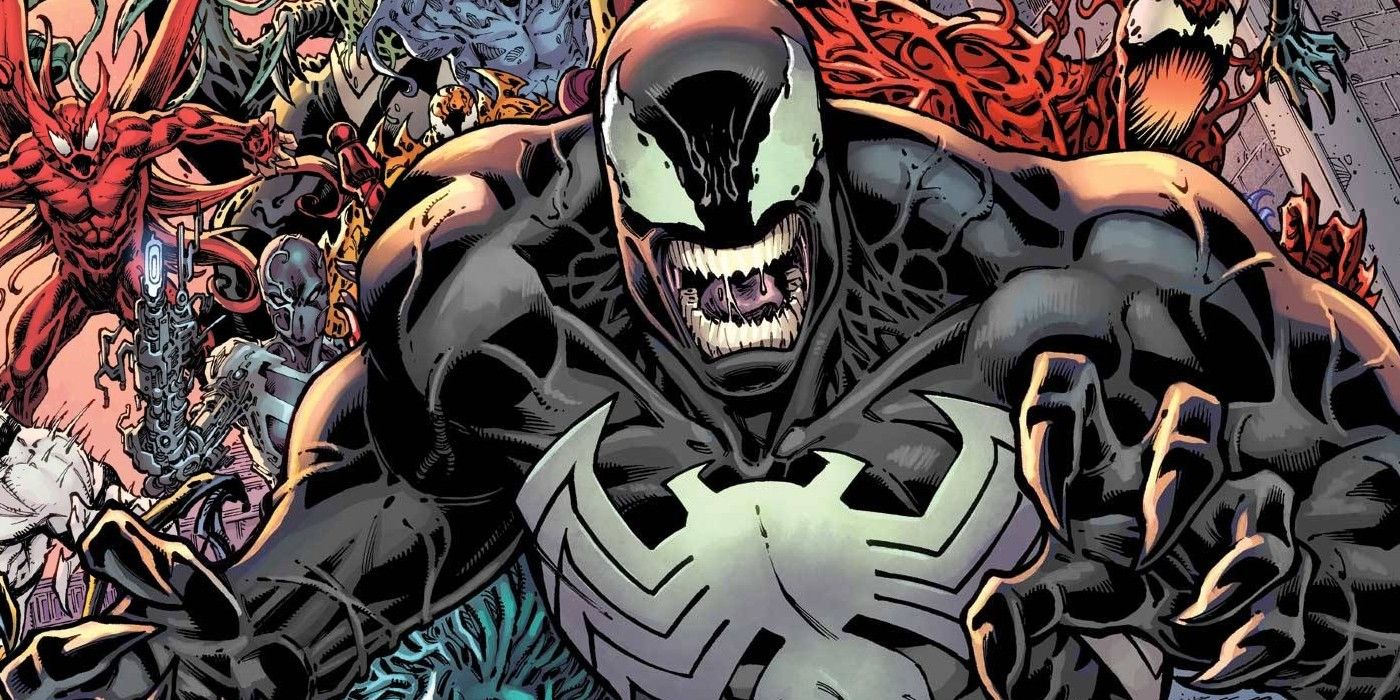
Venom Reveals the Freudian Reason Symbiotes Are So Powerful

Warning: Contains spoilers for Venom: Lethal Protector #2!

Fans know just how powerful Marvel's Venom can be, but what they may not know is that it's because symbiotes connect with humans on a Freudian subconscious level.

When Spider-Man first acquired his black suit he assumed it was just a costume that was telepathically linked to him. When he discovered that the suit was indeed its own living organism, it changed a lot about how he viewed it. The symbiote wanted to bond with him permanently, but the bond goes beyond the physical. It's psychological as well and taps into the theory by famous psychoanalyst Sigmund Freud, who believed that on a subconscious level humans desire to return to their mother's womb.

Related: Marvel's Spider-Man 2: What Happened The Last Time Venom Fought Kraven

It's not that symbiotes are a womb in the literal sense, but as revealed in Venom: Lethal Protector #2, which was written by David Michelinie and illustrated by Ivan Fiorelli, a symbiote takes care of a lot of a person's needs. When the Venom symbiote is injured and Eddie Brock is forced to nurse it back to health, he's surprised by how the outside environment feels. He has to break into a basement in his human form and reflects that he's forgotten what it feels like to be cold and to even feel pain when he's stepping on broken glass.
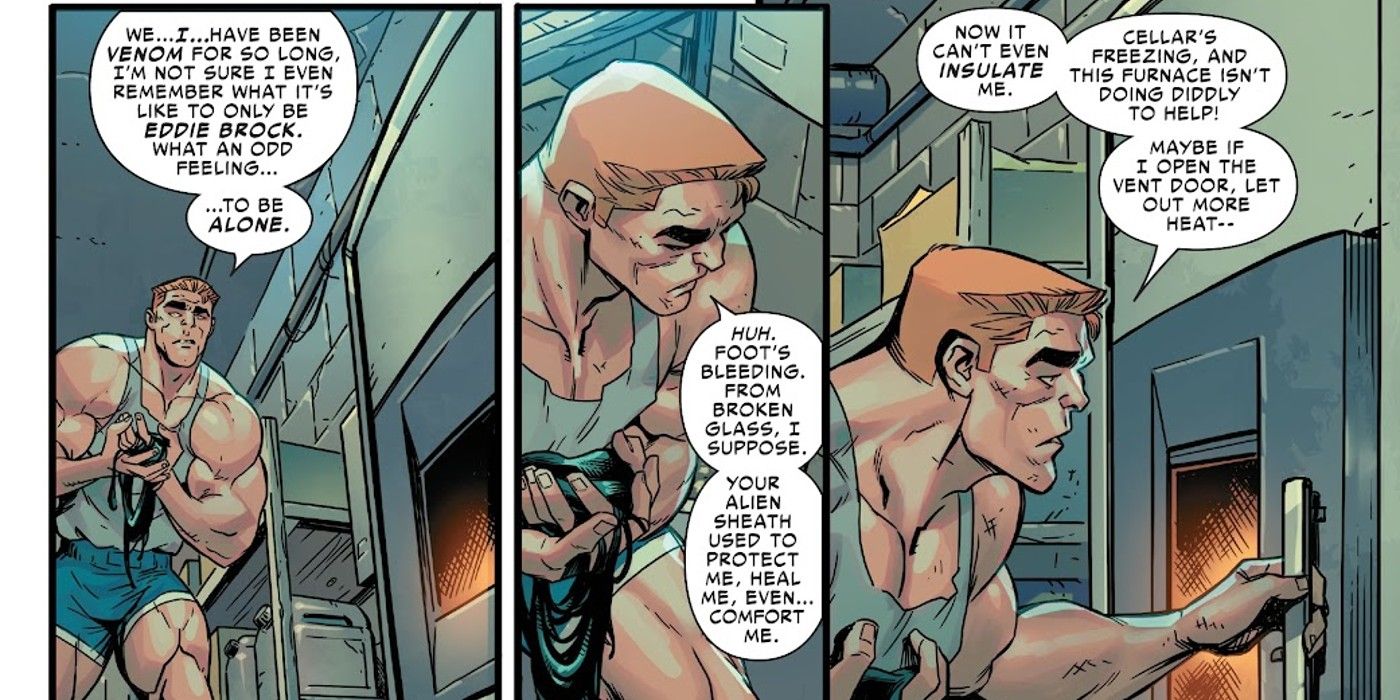
Fans tend to focus on the violent and superpowered nature of symbiotes. It's very cool that Venom gets to swing on organic webs, has super strength, and can climb on walls like Spider-Man. But it might be that Venom's real superpower is allowing its human host to feel perfectly comfortable inside of it. It's a temperature controlled environment that's warm, comforting, and protective of everyday threats like splinters and mosquito bites. While it may not be what Freud had in mind, it does satisfy that human urge to be comforted.

What's so scary about this situation is that while the human believes they are gaining superpowers by merging with the symbiote, they are in fact actually making their human hosts weaker. In this regard, symbiotes aren't a symbiotic organism but more like a parasite. They provide their hosts with a suitable environment that satisfies all of their psychological desires while simultaneously preying on them and feeding off of their life force. Keeping this in mind, it's no surprise that symbiotes are a powerful and everlasting race that thrives not just on human hosts but pretty much any sentient being. So Eddie Brock might do well to be wary of his time as Venom.

Next: Venom is Absolutely Humiliating Spider-Man's Classic Villains


Comments

Popular posts from this blog

CBS' Ghosts: Every Main Ghost Time Period & Backstory Explained

One of CBS' newest sitcoms,  Ghosts , features a cast full of spectral characters that each hail from a distinct time period and come with their own unique backstory and death. Though each of the eight ghosts has a wildly different perspective based on their different experiences throughout history, they nonetheless form a sort of family, which is one of the show's greatest charms. After all, being stuck with the same people for all of eternity allows for plenty of time to get to know each other. Ghosts , which is an adaptation of a BBC show of the same name, stars Utkarsh Ambudkar and Rose McIver (who played Liv Moore on five seasons of  iZombie ) as Jay and Sam, a young couple who inherit a mansion in upstate New York. To their surprise, however, the house also comes with several ghostly inhabitants, who Sam is able to see after a near-death experience. These are Thorfinn (Devan Long), Sasappis (Román Zaragoza), Isaac (Brandon Scott Jones), Hetty (Rebecca Wisocky...

The Hateful Eight's Original Ending Explained (& Why Tarantino Changed It)

The Hateful Eight has an ending full of blood and betrayal, as expected from any Quentin Tarantino movie, but this wasn’t the original ending – here’s why he changed it. Tarantino has explored different genres throughout his career; though he’s best known for his crime movies like Reservoir Dogs and Pulp Fiction , he's also visited genres like martial arts (with both Kill Bill  films) and black comedy ( Once Upon a Time in Hollywood ). In addition, he's shared his version of westerns with Django Unchained and The Hateful Eight , with the latter going through some problems and creative changes even before it began shooting. Set in 1870, Tarantino's The  Hateful Eight follows eight strangers, all with different (and secret) motivations, who end up in a stagecoach lodge after seeking refuge from a blizzard. These characters are Major Marquis Warren (Samuel L. Jackson), John “The Hangman” Ruth (Kurt Russell), Daisy Domergue (Jennifer Jason Leigh), Chris Mannix (Walton Gog...

Why Spider-Man 3's Uncle Ben Retcon Doesn't Change Peter's Origin

Sam Raimi’s Spider-Man 3 is often criticized for a major retcon made to Uncle Ben’s death , but this retcon ultimately doesn’t change Peter Parker’s classic origin story. Raimi’s third film in the iconic Spider-Man trilogy is often criticized, perhaps unfairly. While the film suffers from too many character arcs and plot threads and would have been better as two or three separate films, it does a more than adequate job adapting the Spider-Man comics and telling a sincere story about relatable, flawed, characters who are intertwined with the extraordinary, just as Stan Lee and Steve Ditko intended when co-creating the character. Uncle Ben’s retconned death may alter classic elements from the comic version, but it retains its most important aspects in regards to Peter’s characterization. 2002’s Spider-Man is, for much of the film’s first half, a faithful adaptation of Spider-Man’s 1962 origin story in issue 15 of the Amazing Fantasy comics. An awkward social pariah, Pete...