
Before Thunderbolt and USB emerged as the best options for a compact port that could transfer power and data, there was FireWire, and Apple played a role in both its creation and destruction. Though FireWire can still be used today — and can even best USB and Thunderbolt in niche areas — it's safe to say that USB4 and Thunderbolt 4 are the ports of the future. But for a short period, FireWire was the best of the best, and it facilitated the creation of a revolutionary product. Unlike many obsolete Apple products and standards, FireWire has not been forgotten. Adapters are still sold on the company's website that can connect a FireWire device from decades ago to the newest Macs featuring Apple Silicon.
If someone wasn't a technology enthusiast active in the late 1990s or early 2000s, it's likely they haven't even heard of FireWire, let alone know what it was. But, chances are, they have heard of the iPod, and there is simply no way the original iPod could have existed without FireWire. At the time, the iPod ran on a 1.8-inch Toshiba hard drive, which was essentially a scaled-down version of a desktop hard drive. This required a lot of power, and the USB specification wasn't capable of transferring power and data at that scale. But with FireWire, it was possible to power the hard drive while songs were being downloaded to the iPod, making the first-generation product possible. Later, USB would grow to support the iPod, but it all started with FireWire.
FireWire was one of the first serial buses that could transmit data and power at high speeds. It was developed primarily by Apple, Sony and Panasonic — and the collaboration between those technology companies was intentional. Apple intended for FireWire to replace other older video and audio connection standards and began development in the late 1980s. It presented the product to the Institute of Electrical and Electronics Engineers and finally released the connection standard to the public, named IEEE 1394 at the time. The 1394 Trade Association was created to promote the use of IEEE 1394 in other devices, but Apple was instrumental in the connection standard's success.
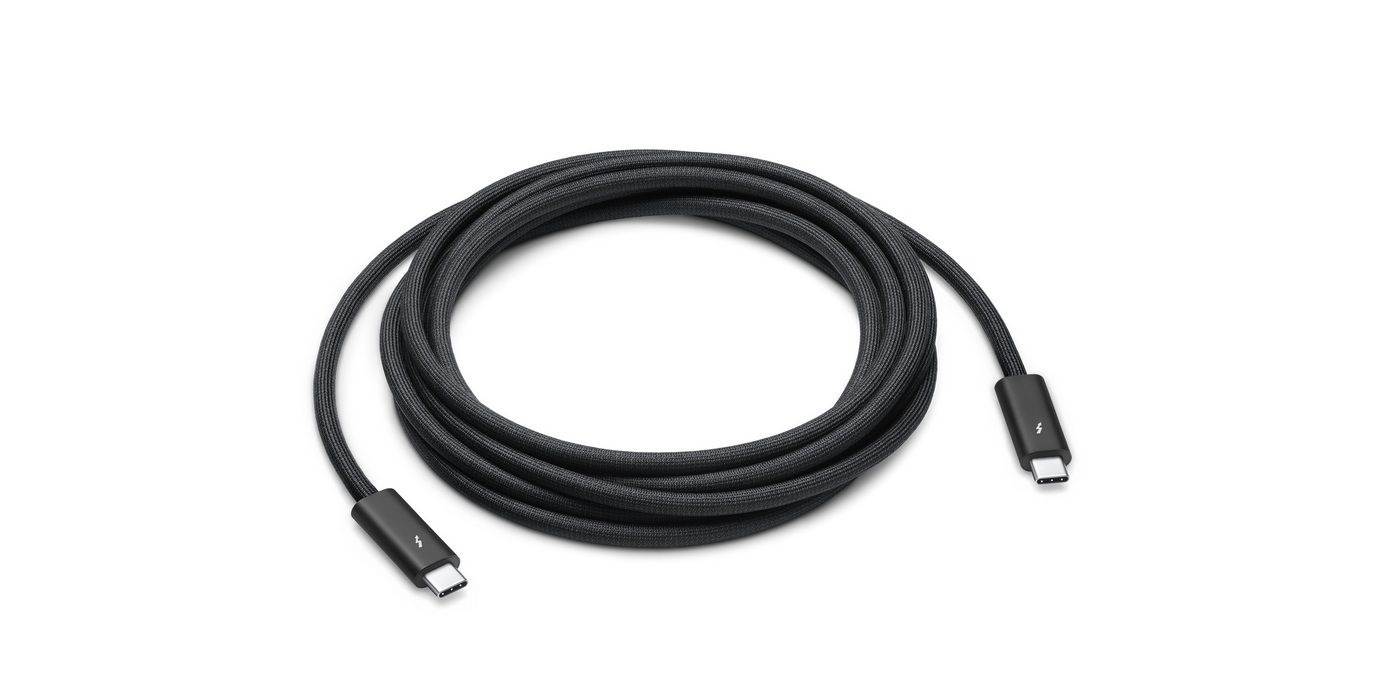
The name IEEE 1394 wasn't suitable for consumer marketing, and Apple knew this. As such, it started marketing the connection standard as FireWire, with a catchy name and a recognizable logo. In 2002, Apple came to an agreement with the 1394 Trade Association to make the FireWire name the universal brand identity for all IEEE 1394 connections, representing the company's commitment to the standard. Through 2011, nearly all Mac computers featured FireWire and select iPods connected through FireWire. The standard made recording easier in 2004 after a collaboration with Panasonic, and FireWire became a staple of early iMacs. However, the standard quickly became doomed without Intel's support, and Apple pivoted to a different connection standard.
Intel's support for any connection standard is crucial because support for connections has to be implemented by the chipset maker. The microchip fabrication company still makes the most-used processors in the world, and without their support, motherboard manufacturers had no reason to support FireWire at the board level. This ruled out support for nearly all PCs, which is a massive market. Moreover, the need for FireWire was dispelled as USB grew to be more powerful. When the standard was first introduced, it supported 400 megabits per second compared to USB's 12 megabits per second. Now, the USB4 standard supports 40 gigabits per second, and FireWire just couldn't keep up. Finally, in 2012, Apple went all-in on Thunderbolt support, forever dooming the FireWire standard.
Comments
Post a Comment