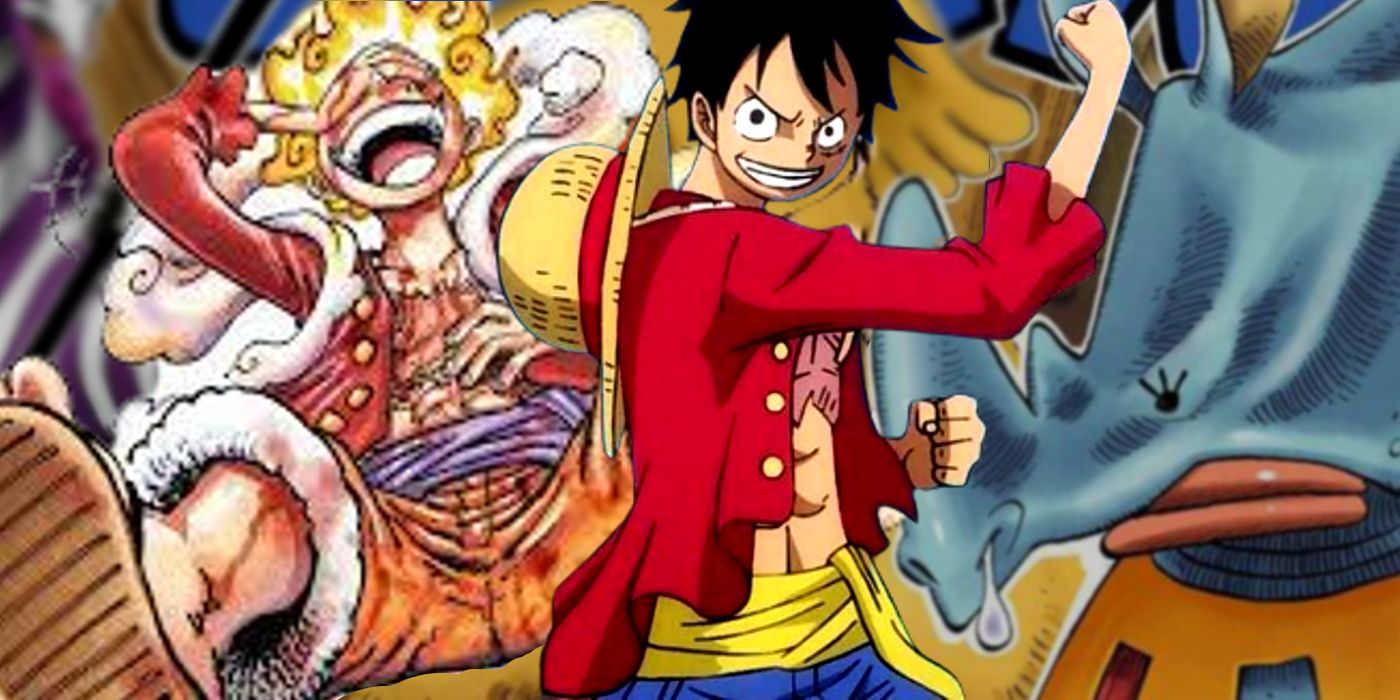
Warning: Contains spoilers for One Piece Road to Laugh Tale vol. 4
One of the biggest mysteries in One Piece, the secret of Zoan-type Devil Fruit awakenings, finally receives an official explanation in the last part of the special Road to Laugh Tale. By showing concept art and notes by Eiichiro Oda himself on Luffy's powerful Gear Five form, Road to Laugh Tale vol. 4, answers some of the questions that fans of the best-selling manga have been asking for a long time.
Zoan-types were introduced early on in the series, and are among the most common types of Devil Fruits. They allow the users to gain the physical abilities of a specific animal, which can be accessed by transforming into a full "Beast Form" or into a hybrid "Human-Beast Form." More powerful versions of these Devil Fruits were introduced later in the series: the Ancient Zoans, bestowing the powers of extinct animals such as dinosaurs, and the strongest and rarest of all, the Mythical Zoans, such as the one eaten by Kaido, connected to creatures of legend and folklore and giving the user a wide set of powers. Something that was never clarified, however, was what the "awakening" of a Zoan fruit entails. Awakening a Devil Fruits means that the user's mind and body are able to harness its full potential, just like Luffy did when he unlocked the powers of "Sun God Nika" during his fight against Kaido.
After the previous issue of the special provided crucial new information on Luffy's Gear Five form, Road to Laugh Tale vol. 4 further expands on that with a concept gallery. One of the manga's biggest recent revelations was that Luffy's Devil Fruit is not the Paramecia Gomu Gomu no Mi as believed, but the Mythical Zoan Hito Hito no Mi, Model: Nika. Eiichiro Oda's notes published in Road to Laugh Tale vol. 4 mention "Zoan awakenings" specifically, clarifying that they are different from Paramecia because awakening a Zoan carries risks connected to the innate nature of their respective animals. The only other awakened Zoans seen in the series besides Luffy's, the guards of the Impel Down prison, showed the drawbacks of this process, having been consumed by their animal nature and showing very little signs of human behavior.
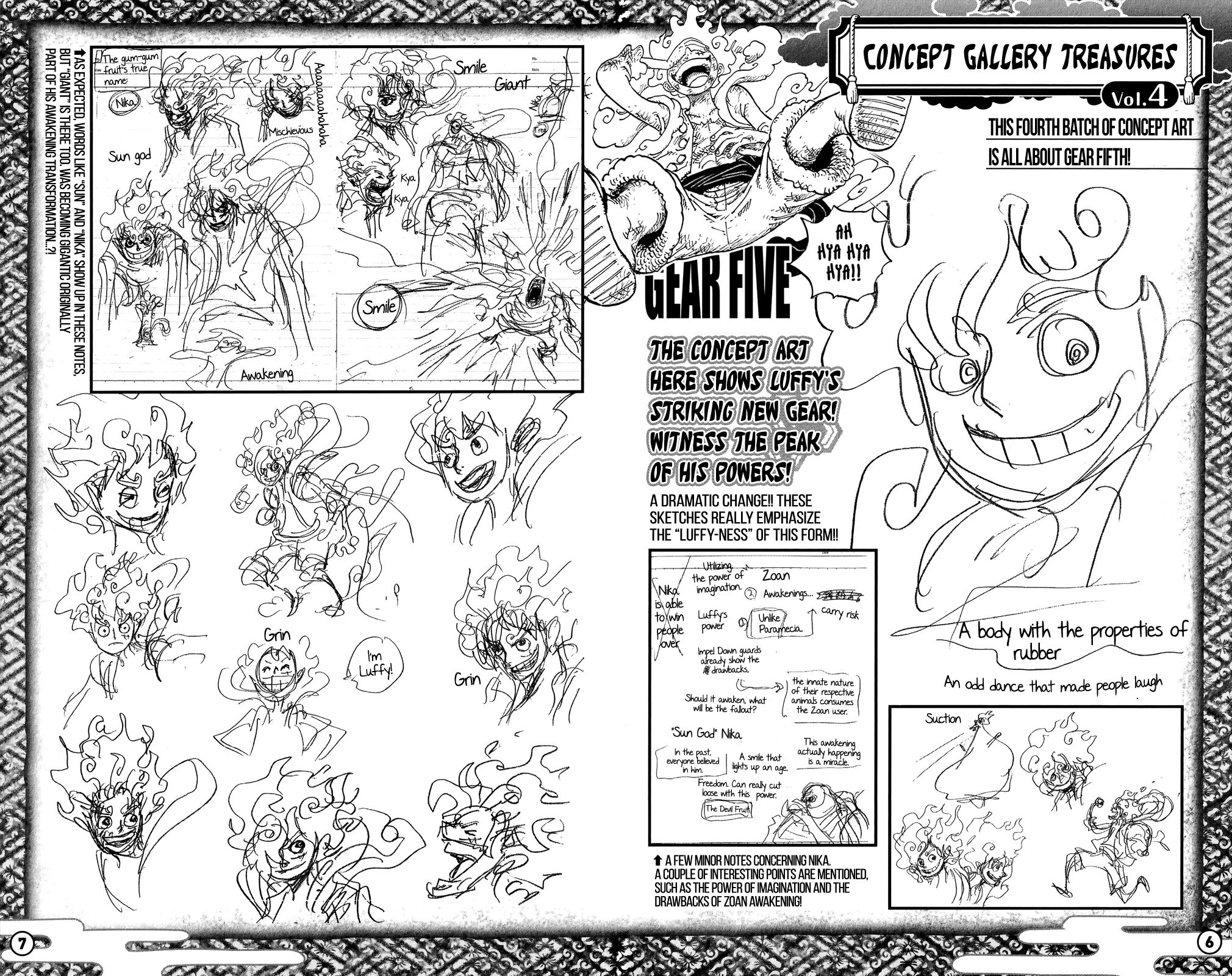
These notes explain a lot not just about Zoans, but also Luffy's still unclear connection to Nika and his odd behavior while in Gear Five form. It has been implied in the manga that Zoan fruits "carry their own will," which is how the Nika fruit was able to avoid being captured by the World Government for centuries. This "spirit" residing inside Zoans should also explain how the World Government's lead scientist, Dr. Vegapunk, was able to infuse the power of some of these Devil Fruits inside inanimate objects, which should not have been possible. Zoans' awakenings, thus, let out the will or spirit of the animal connected to the Fruit, which could take over the user's body (like it happened to the Impel Down guards). This would also explain why Luffy showed a strikingly different personality while in Gear Fifth form, and why the World Government is so afraid of this awakening, as it would release in the world the actual "Nika," a legendary warrior that was worshipped as a liberator by slaves in the past.
The risks connected with Zoan awakenings could also finally explain why Kaido never showed his awakened form. Perhaps the former Yonko was afraid that the powerful dragon residing inside his Devil Fruit could take over, or maybe his "Drunken Form," where he showed quick changes of personality, was actually his awakened form all along. Devil Fruits remain one of the biggest mysteries in One Piece, but at least, thanks to Road to Laugh Tale vol. 4, fans of the manga now know a little more about Zoans and their awakenings.
Comments
Post a Comment