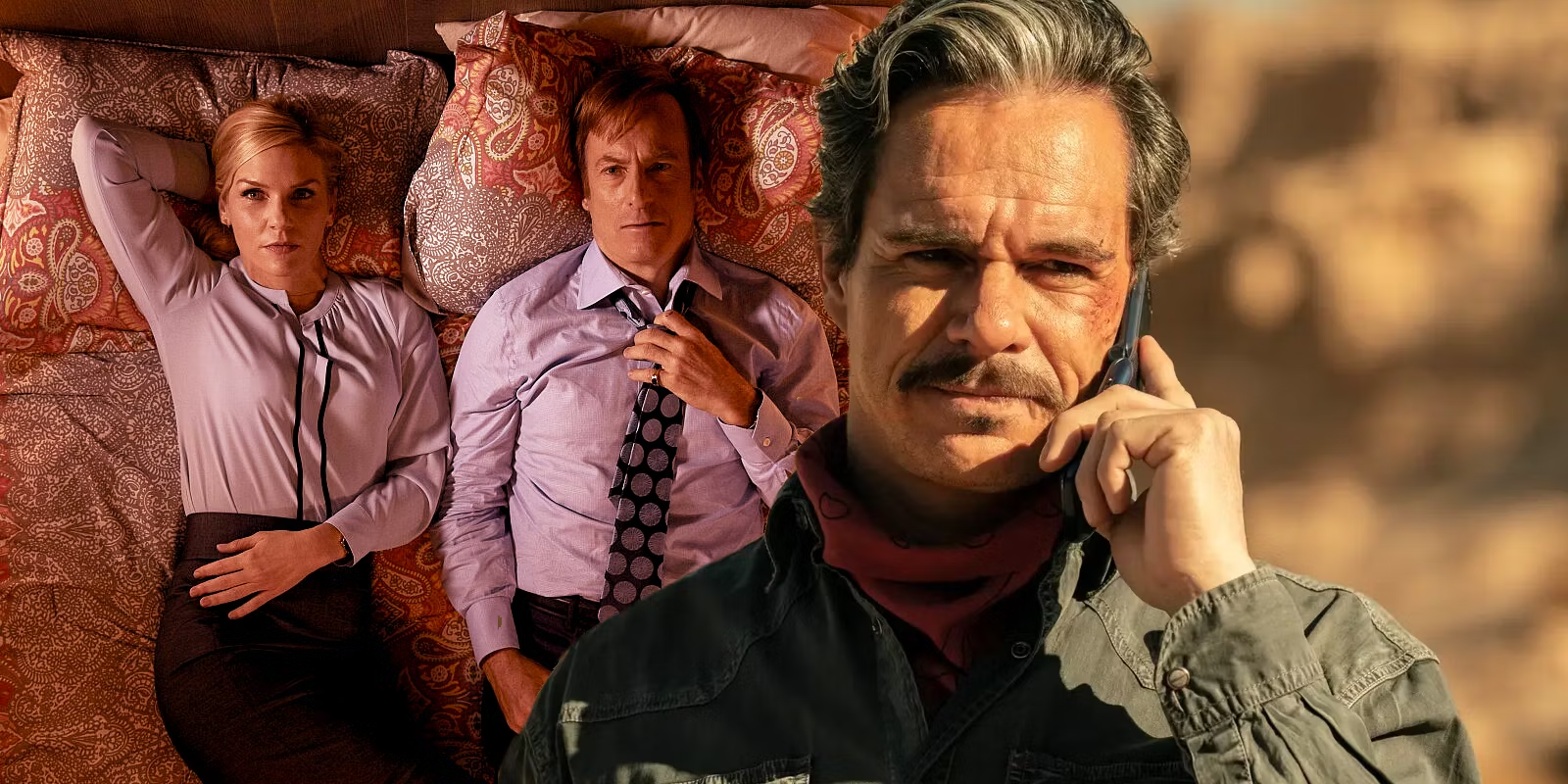
Warning: SPOILERS for Better Call Saul season 6, episode 9.
Better Call Saul season 6 sees the inevitable breakup of Jimmy McGill and Kim Wexler, but one infamous line in Breaking Bad proves that ending the relationship was the best decision for all. After all of the theories about why Kim is absent from Breaking Bad, it's ironic that the reason is the simplest of all: that she broke up with Jimmy. The ending of Kim's story in Better Call Saul was the last mystery that the prequel show had to unveil after the fate of Nacho Varga, the death of Lalo Salamanca, and the explanation for Saul Goodman's Breaking Bad line about Lalo.
Their breakup paves the way for Jimmy to complete his transformation into Saul Goodman, as seen by the flashforward in Better Call Saul season 6, episode 9, "Fun and Games." This transformation is only possible because Jimmy can no longer protect someone else and thus the consequences of his actions as Saul Goodman fall upon him alone. Kim and Jimmy's relationship made them a force to be reckoned with, but that didn't come without consequences, as their plan against Howard Hamlin resulted in him being at the wrong place at the wrong time and ultimately killed by Lalo Salamanca.
In the aftermath of Howard's death, Better Call Saul season 6, episode 9 shows the pair attempting to go on with their days as usual, with their façades cracking once they get back to their apartment — the place where Howard was killed. In an attempt to console Kim, Jimmy says: "One day we'll wake up and brush our teeth and go to work, and at some point, we'll suddenly realize that we haven't thought about it at all. None of it. And that's when we'll know. We'll know we can forget." Of course, Jimmy doesn't forget about Lalo and Howard, as evidenced by the infamous Breaking Bad line about Lalo. When Jesse and Walt take Jimmy to the desert and hold him at gunpoint, Jimmy asks, "Did Lalo send you?" Jimmy knows that he's never going to forget when he lies to Kim, and he knows she'll never forget either.

Howard's death in Better Call Saul is just one example of why Kim's line "we're bad for everyone around us" rings true. Their actions don't just affect Howard, and everyone who knew him, but they also put themselves in danger as one bad move would've resulted in Lalo letting off another bullet. Despite their actions against other people, the fact that they lie to each other is damning of their relationship. Kim reveals that she knew Lalo was alive and didn't tell Jimmy, and she lies for the same purpose that he did: to protect their partner. While this desire to protect is rooted in good intentions, it severs the trust between them and proves that together they're "poison."
Jimmy's lie to Kim is more evidence that Mike was correct when he chose to only tell Kim about Lalo because she's made of "sterner stuff" than Jimmy. The scene in Breaking Bad when Saul says the Lalo line is proof that he's haunted by previous events, and proof that he wouldn't have been able to deal with any further consequences if Jimmy and Kim continued their relationship and continued to wreak havoc on those around them. While it remains uncertain what happens to Kim after Better Call Saul, her breakup with Jimmy seems a small mercy in the grand scheme. Nonetheless, Jimmy's lie and the Lalo line in Breaking Bad are evidence that Vince Gilligan and Peter Gould made good on their promise when they said that the events of Better Call Saul would make audiences view Breaking Bad in an even more sinister light.
Episodes of Better Call Saul air Mondays on AMC.
Comments
Post a Comment