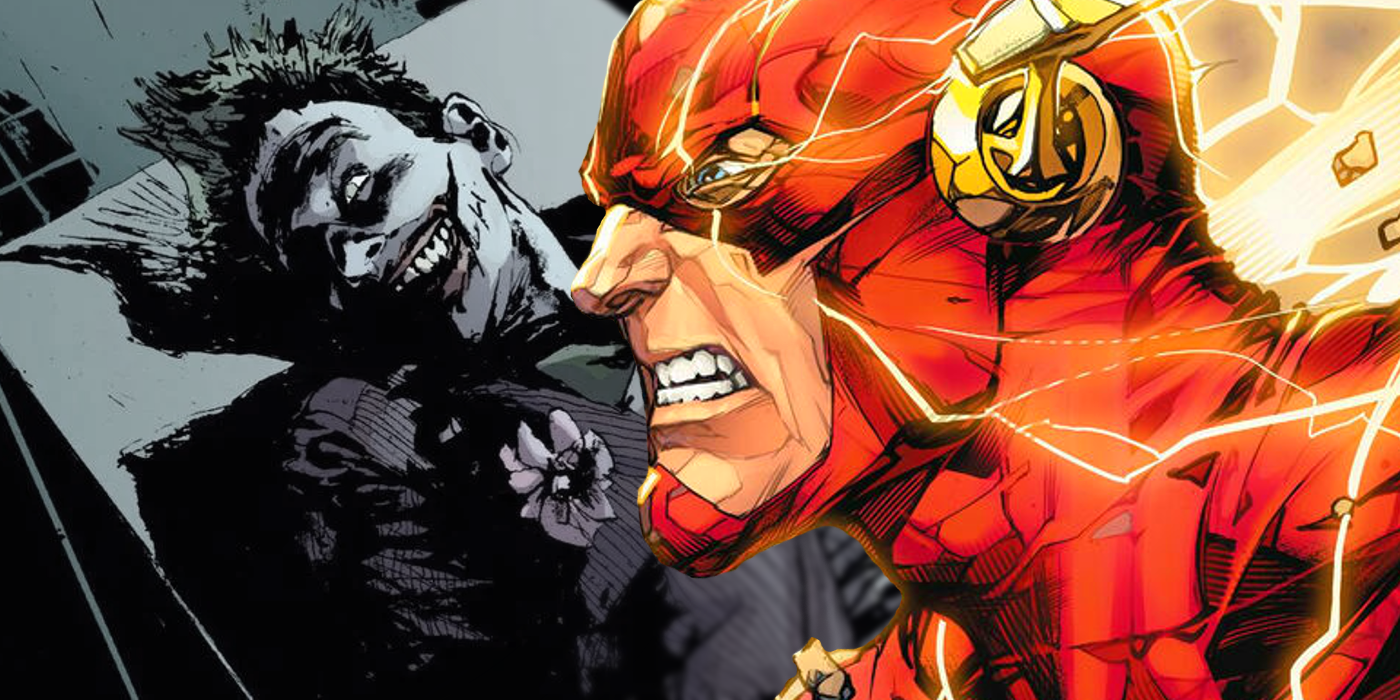
In a past issue of DC Comics' The Flash, Wally West revealed that while he keeps it to himself, he believes supervillains like Joker should be met with lethal action. While teaming with Wonder Woman against their classic villains Cheetah and the Reverse-Flash, Wally and Diana spend most of the issue tethered together with the Lasso of Truth. As such, the Flash is compelled to be honest, sharing with Diana a personal belief he holds about certain villains and how they should receive a more permanent justice than most heroes are willing to give.
In 2005's Flash #219 from writer Geoff Johns and artist Justiniano, Cheetah broke the Reverse-Flash out of his prison cell in Iron Heights, wanting to become as fast as a speedster to finally take down Wonder Woman once and for all. However, the Reverse-Flash reveals that his powers differ from Wally West's Fastest Man Alive, and that he can't just share his speed with her. Instead, he encourages Barbara Minerva to kill the first, retired Cheetah who Wonder Woman fought in the 1940s. In doing so, Minerva would then become the sole Cheetah, removing a mystical barrier and allowing her to reach her full potential as a metahuman supervillain. Naturally, this breakout prompts Wally and Diana to team up and bring them both in.
Seeing as how Wonder Woman had recently blinded herself as part of defeating Medusa, she had Flash lead her using the Lasso of Truth as a tether. As such, Wally and Diana were much more open and honest with one another, speaking the truth about how they felt after finding the first Cheetah Priscilla Rich murdered despite being retired and in her eighties. As a result, Wally confirms his support of the death penalty for certain villains, believing that some people just need to die for their crimes, noting it's an unpopular opinion among the Justice League. While he's referring to Reverse-Flash and Cheetah, the poster child for this belief has to be the Joker, especially since so many fans (and fellow heroes) have spent years asking why Batman doesn't make an exception to his "One Rule" and rid the world of his vile nemesis.
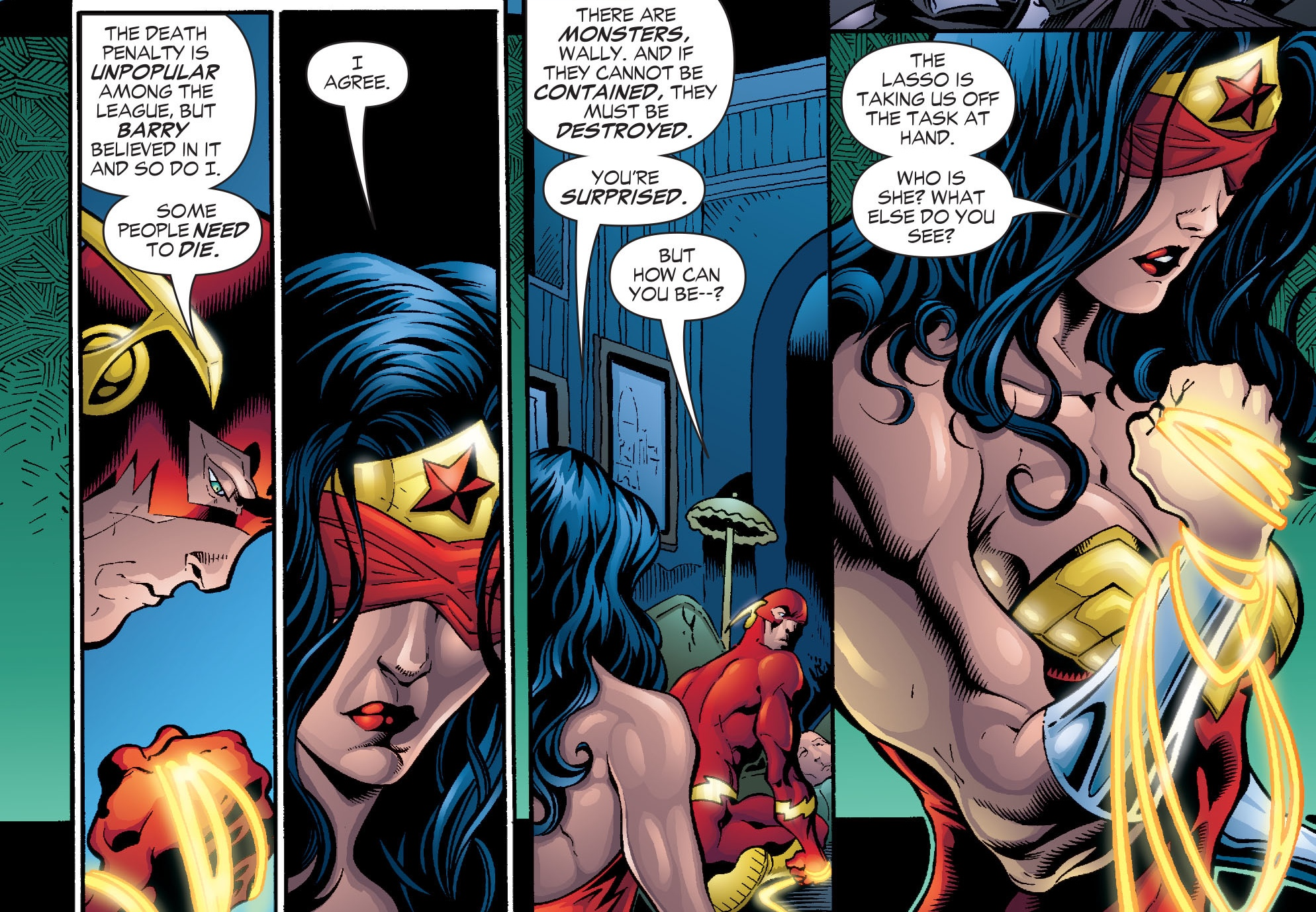
Notably, Wally believes in the death penalty rather - it seems - than lethal vigilante justice. Having trained under Barry Allen (a forensic chemist for Central City Police Department) and worked adjacent to law enforcement himself in the past, it makes sense that while Flash believes villains like Joker should die, he doesn't necessarily believe superheroes have the right to make that decision unilaterally. This line of thinking from Wally (and Barry Allen before him) is rather interesting considering the relationship they've both had with Central City's Rogues, overlooking minor crimes and helping many of them seek redemption. As such, it seems as though the villains deserving of the death penalty in Wally's mind have to be truly and irredeemably evil (like the Joker.)
Wonder Woman is also one of the few heroes who agrees with the Flash in this regard, tying nicely with her explanation to Superman years later in the New 52 era as to why her rogues gallery is so small compared to other heroes: "When I deal with them, I deal with them." As such, it doesn't seem as though Diana would hesitate to support Joker's death either. While Wonder Woman and her warrior's perspective is largely known, the Flash supporting the death penalty is likely something not very many fans are aware of, and this issue helps support the idea that Wally would likely vote in favor of the Joker's death if the scenario ever arose in the DC Universe.
Comments
Post a Comment