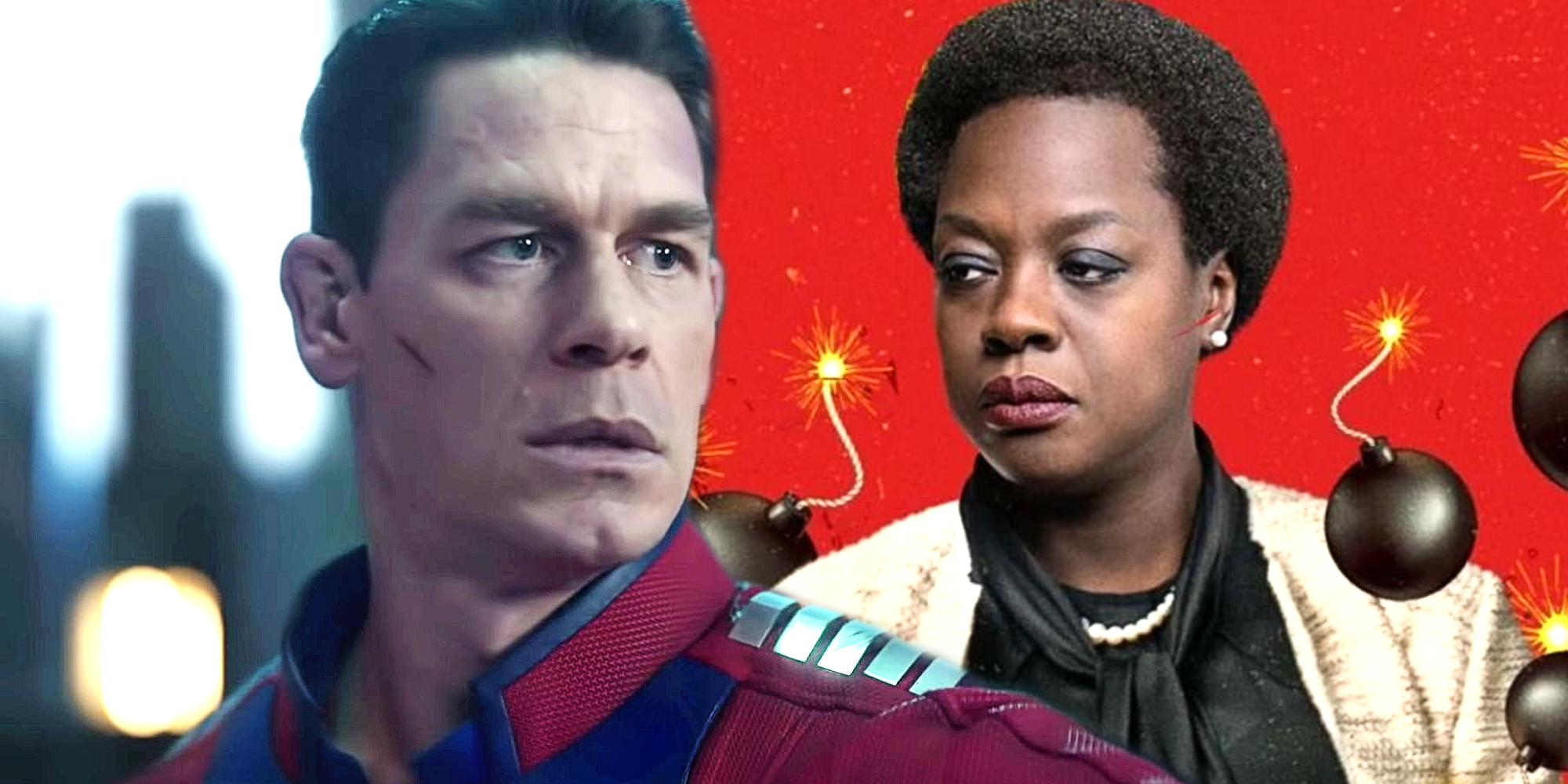
Peacemaker's Missing Character Makes The Suicide Squad's Villain Even Darker

Warning! Spoilers ahead for Peacemaker.

A character from The Suicide Squad is notably absent from the first three episodes of Peacemaker and it has some possibly dark implications for villain Amanda Waller. Task Force X is famous for being the best of the worst. While anti-heroes like Harley Quinn and King Shark get the job done, their methods are often morally questionable, and Peacemaker has shown a willingness to betray and kill his teammates. Fittingly, the mastermind in charge, Amanda Waller, is used to implementing some twisted tactics to get what she wants.

However, Amanda Waller is a human amongst metahumans. While she's smart and powerful enough to have deadly, superpowered criminals under her thumb, her wits are challenged by people like Batman, and her determination is matched by people like Bloodsport and Ratcatcher 2, who ignored her orders to leave Corto Maltese without fighting Starro. No less importantly, Amanda Waller isn't invulnerable to a blow to the head with a golf club, which Flo Crawley delivers in order to help Task Force X.

Related: Peacemaker Is Set After Flashpoint's DCEU Reboot - Theory Explained

According to a tweet from Peacemaker writer and director James Gunn, Flo Crawley was initially supposed to be arrested, but the scene was cut for flow, leaving her fate open to interpretation. Considering that Amanda Waller punished Emilia Harcourt and John Economos with a subpar HQ for betraying her, the absence of Flo Crawley in Peacemaker Waller resorted to a harsher punishment for her. It's extremely easy for Waller to wipe anybody off the map if it's necessary. Knocking Amanda Waller out with a golf club definitely earns Flow Crawley a more permanent retribution.
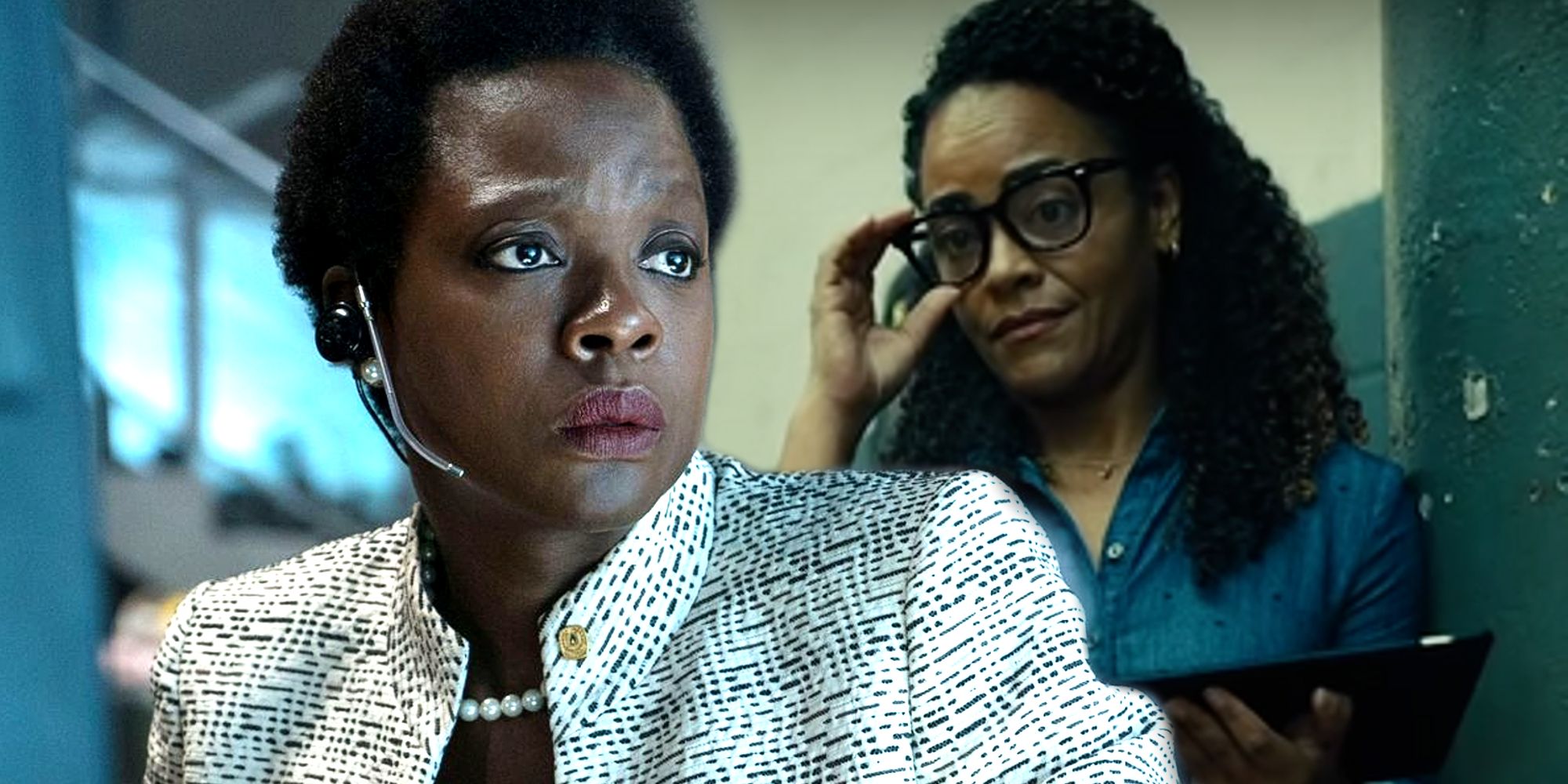
In the comics, Flo Crawley is Amanda Waller's cousin. She becomes friends with Oracle and develops a crush on Bronze Tiger, which leads her to participate in an on-field mission with the Female Fury Lashina. When Amanda Waller realizes Flo Crawley is in peril, she sends Task Force X/Suicide Squad team members to Apokolips to rescue her, to no avail. It's possible that Amanda Waller and Flo Crawley are also relatives in the DCEU (although this relationship seems to have been transferred to Leota Adebayo, Waller's daughter, in Peacemaker). If so, Waller could have sent Crawley far away from any Suicide Squad-related missions to both protect her and intimidate the rest of her colleagues, making them think that she killed her.

Whatever happened to Flo Crawley after The Suicide Squad, the fact that anyone could hurt Amanda Waller and get away with it is an issue the Task Force X boss has to solve before assembling a new team. Peacemaker highlights how important reputation is for a superhero, with Chris Smith constantly teased for not being the hero he believes himself to be and constantly being compared to heroes like Aquaman and Batman. For better or for worse, killing is the name of the game in the more grounded part of the DCEU.

More: Peacemaker: What Is Amanda Waller's Plan?

Peacemaker releases new episodes on Thursdays on HBO Max.


Comments

Popular posts from this blog

CBS' Ghosts: Every Main Ghost Time Period & Backstory Explained

One of CBS' newest sitcoms,  Ghosts , features a cast full of spectral characters that each hail from a distinct time period and come with their own unique backstory and death. Though each of the eight ghosts has a wildly different perspective based on their different experiences throughout history, they nonetheless form a sort of family, which is one of the show's greatest charms. After all, being stuck with the same people for all of eternity allows for plenty of time to get to know each other. Ghosts , which is an adaptation of a BBC show of the same name, stars Utkarsh Ambudkar and Rose McIver (who played Liv Moore on five seasons of  iZombie ) as Jay and Sam, a young couple who inherit a mansion in upstate New York. To their surprise, however, the house also comes with several ghostly inhabitants, who Sam is able to see after a near-death experience. These are Thorfinn (Devan Long), Sasappis (Román Zaragoza), Isaac (Brandon Scott Jones), Hetty (Rebecca Wisocky...

The Hateful Eight's Original Ending Explained (& Why Tarantino Changed It)

The Hateful Eight has an ending full of blood and betrayal, as expected from any Quentin Tarantino movie, but this wasn’t the original ending – here’s why he changed it. Tarantino has explored different genres throughout his career; though he’s best known for his crime movies like Reservoir Dogs and Pulp Fiction , he's also visited genres like martial arts (with both Kill Bill  films) and black comedy ( Once Upon a Time in Hollywood ). In addition, he's shared his version of westerns with Django Unchained and The Hateful Eight , with the latter going through some problems and creative changes even before it began shooting. Set in 1870, Tarantino's The  Hateful Eight follows eight strangers, all with different (and secret) motivations, who end up in a stagecoach lodge after seeking refuge from a blizzard. These characters are Major Marquis Warren (Samuel L. Jackson), John “The Hangman” Ruth (Kurt Russell), Daisy Domergue (Jennifer Jason Leigh), Chris Mannix (Walton Gog...

Why Spider-Man 3's Uncle Ben Retcon Doesn't Change Peter's Origin

Sam Raimi’s Spider-Man 3 is often criticized for a major retcon made to Uncle Ben’s death , but this retcon ultimately doesn’t change Peter Parker’s classic origin story. Raimi’s third film in the iconic Spider-Man trilogy is often criticized, perhaps unfairly. While the film suffers from too many character arcs and plot threads and would have been better as two or three separate films, it does a more than adequate job adapting the Spider-Man comics and telling a sincere story about relatable, flawed, characters who are intertwined with the extraordinary, just as Stan Lee and Steve Ditko intended when co-creating the character. Uncle Ben’s retconned death may alter classic elements from the comic version, but it retains its most important aspects in regards to Peter’s characterization. 2002’s Spider-Man is, for much of the film’s first half, a faithful adaptation of Spider-Man’s 1962 origin story in issue 15 of the Amazing Fantasy comics. An awkward social pariah, Pete...