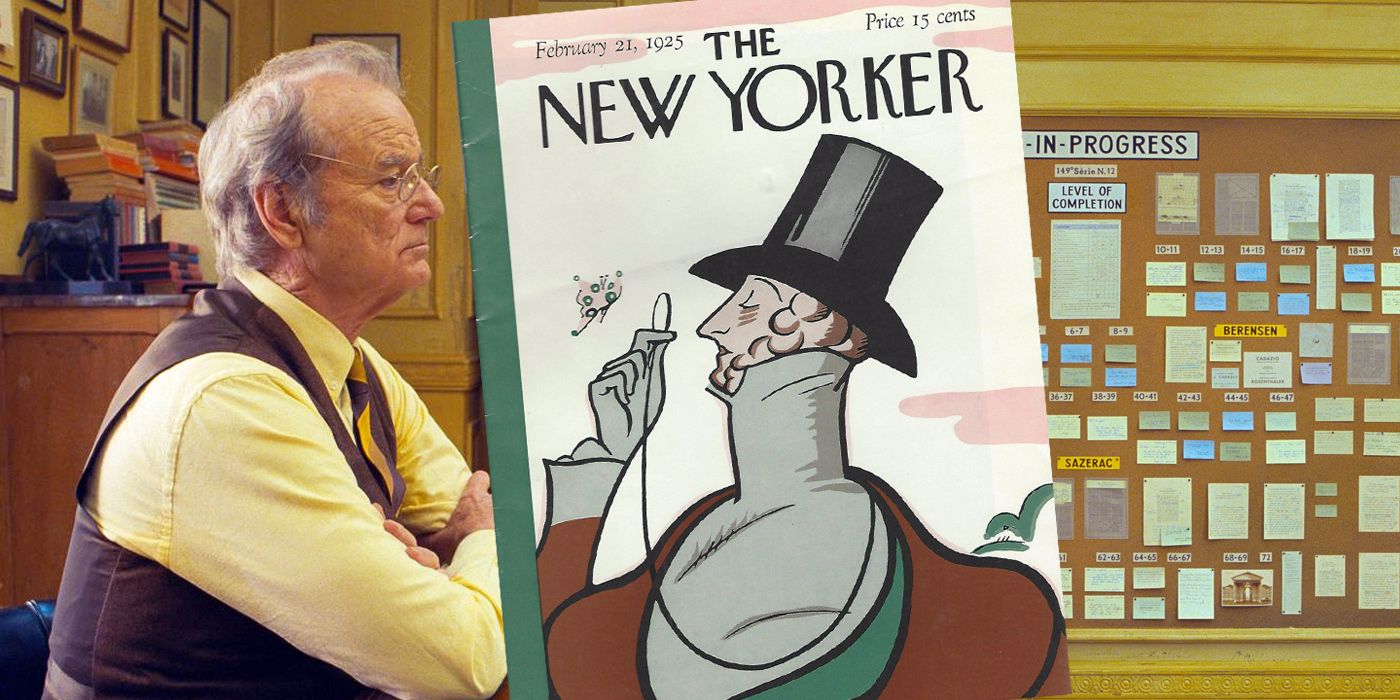
Could Wes Anderson’s latest film, The French Dispatch's, inspiration be real people and based on true events? The French Dispatch is Wes Anderson’s 21st movie and remains true to his trademark whimsical style like previous eccentric, ensemble films The Royal Tenenbaums and The Grand Budapest Hotel. Originally slated to premiere at the Cannes Film Festival in 2020, The French Dispatch was significantly delayed due to the pandemic, but finally debuted in theaters on October 22, 2021.
The five-time Oscar-nominated and award-winning director, Wes Anderson, has a habit of creating quirky characters that exist in fanciful settings, and The French Dispatch is no exception. Set in 1960s France, The French Dispatch is a sort-of true story about an outpost of an American Magazine stationed in the small, fictional town of Ennui-sur-Blasé. The story follows an obsessive editor, Arthur Howitzer Jr., and his set of American expatriate writers as they compile stories for the final issue of the magazine.
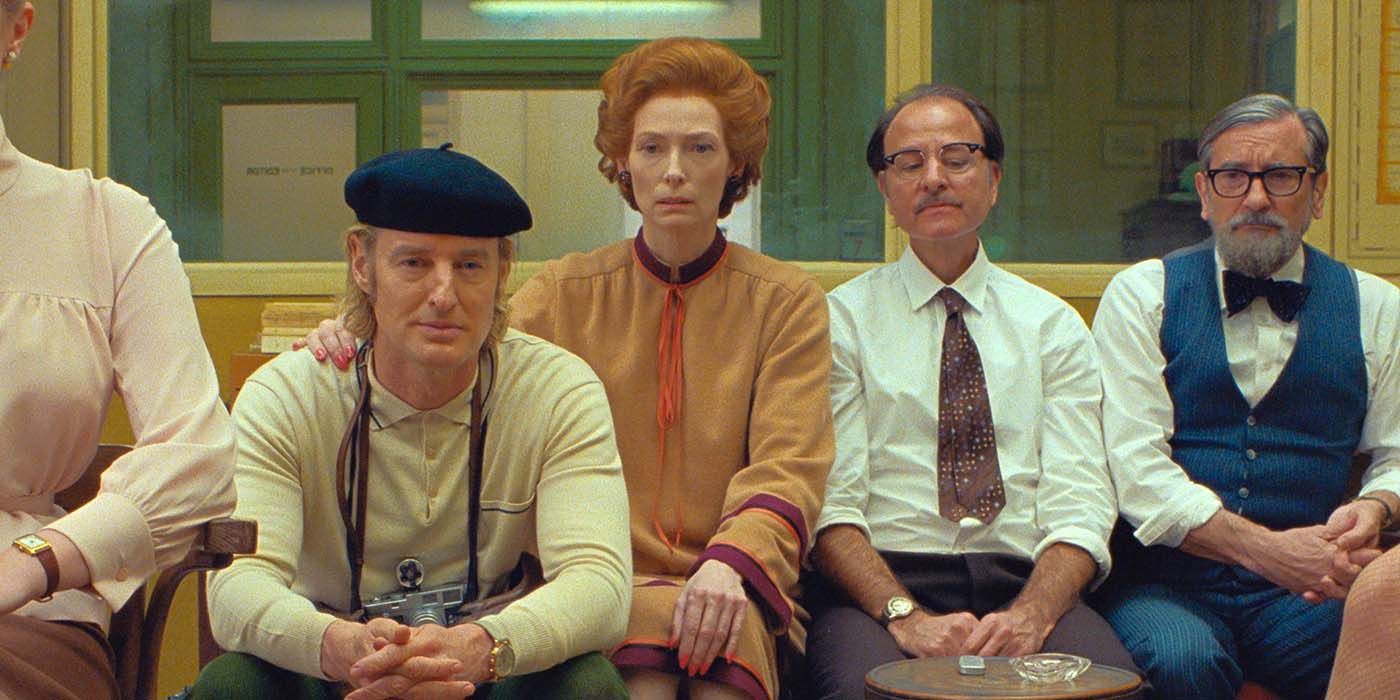
As is tradition with Wes Anderson films, the cast of The French Dispatch is loaded with A-listers including many of Anderson’s favorites that have acted in a number of his previous films. And, while the eccentric characters the actors portray in The French Dispatch are fictional, they, like many aspects of the film, reflect some truth. The French Dispatch's true story is inspired by the real editor of the famous American magazine, The New Yorker, along with his staff and their stories.
The New Yorker’s co-founder and long-time editor-in-chief, Harold Ross, acted as The French Dispatch’s inspiration for Arthur Howitzer Jr. played by Wes Anderson's most frequently used actor, Bill Murray. In fact, when asked about The French Dispatch's true story, Wes Anderson says that the story is truly about Bill Murray’s character, Arthur Howitzer Jr, and thus The French Dispatch is largely an ode to Harold Ross. In an interview with Emma Baty (via Cosmopolitan), Anderson says: "It is more a portrait of this man, of this journalist who fights to write what he wants to write. It's not a movie about freedom of the press, but when you talk about reporters you also talk about what's going on in the real world."
Ross was famously obsessive, editing 1,399 issues of the magazine over 26 years until his death. His crew of writers included Joseph Mitchell (characterized by Herbsaint Sazerac in The French Dispatch and played by Owen Wilson); James Baldwin and A. J. Liebling (The French Dispatch’s Roebuck Wright, played by Jeffrey Wright, was a combination of these two writers); and S. N. Behrman (Tilda Swinton’s J. K. L. Berenson in The French Dispatch). Oscar-winner Francis McDormand’s character in The French Dispatch, Lucinda Krementz, is based on the writer Mavis Gallant, whose piece entitled, The Events in May: A Paris Notebook covered the real protests known as “May 68” that took place in Paris in the spring of 1968.

The film is separated into sections that loosely correlate with New Yorker stories, and one of The French Dispatch's true stories (or closest to it) is Tilda Swinton’s J. K. L. Berenson's story on the art dealer, Lord Duveen. One of the characters in The French Dispatch that is not based on the staff of The New Yorker, Lord Duveen, is played by fellow Oscar-winner Adrien Brody. Another character that is loosely based on reality is Timothée Chalamet, though his student revolutionary character in The French Dispatch, Zeffirelli, is truly based more on a type. The story in which he is featured is the one written by McDormand's character, Lucinda Krementz, who is based on Mavis Gallant. Chalamet's Zeffirelli (along with Lyna Khoudri's Juliet, Mohamed Belhadjine's Mitch-Mitch, and Nicolas Avinée's Vittel) is representative of the type of young rebel that participated in the real protests featured in The New Yorker's The Events in May: A Paris Notebook. Finally, The French Dispatch's inspiration for Liev Schreiber's talk show host came from Dick Cavett.
Comments
Post a Comment