The One Leader Who Can Save The X-Men is Human, Not Mutant

Warning: spoilers for Sabretooth #2 are ahead. 

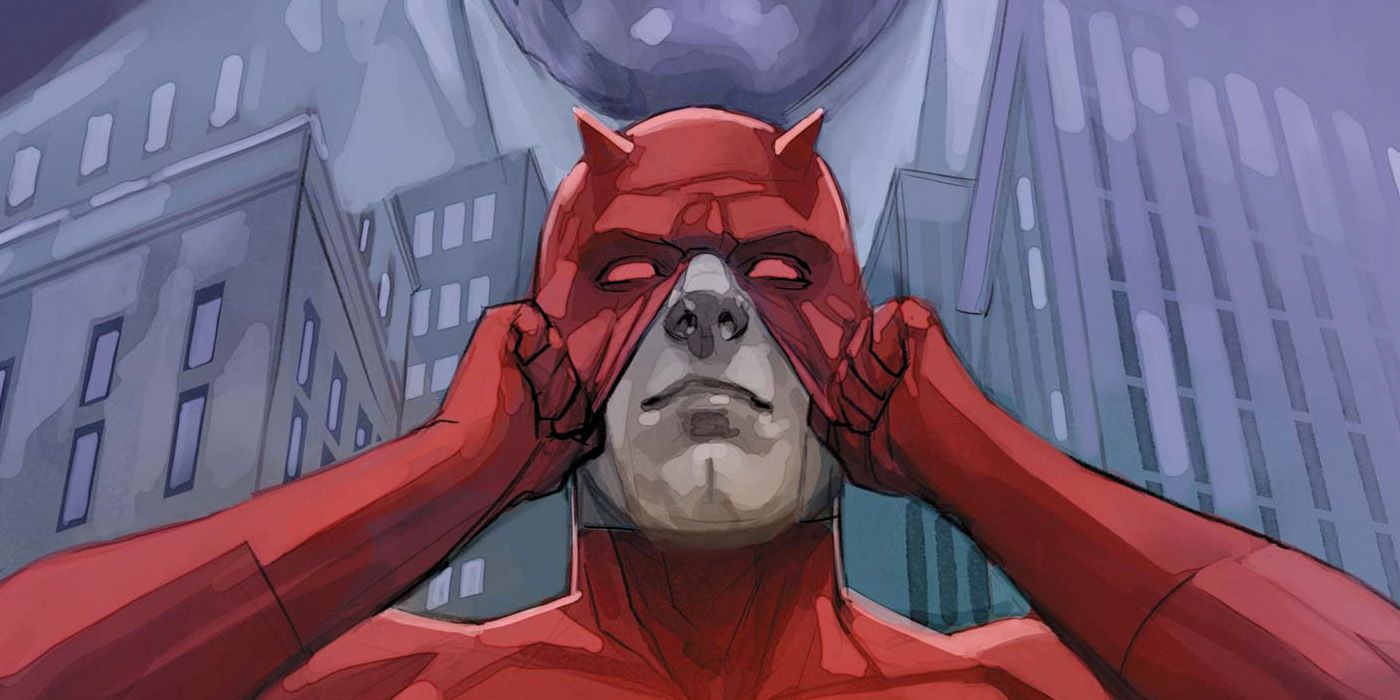
Professor X is an iconic leader of the X-Men in Marvel Comics, but his decisions on Krakoa could spell disaster for mutantkind in the near future. The island nation of Krakoa is intended to be a safe haven for mutants outside the oppression of human society, and while its "for mutants, by mutants" approach has been immensely healing for some, the island is far from perfect. With the establishment of sacred laws on Krakoa that are meant to guide mutants in this exciting new stage of existence for them, the X-Men have run into a problem of what to do when mutants break these foundational laws. As shown in Sabretooth #2 from Victor LaValle, Leonard Kirk, Rain Beredo, VC's Cory Petit, and Tom Muller, Charles's ignorance as a leader comes at a steep moral price that makes Daredevil, a human, Krakoa's only chance at righting its wrongs.

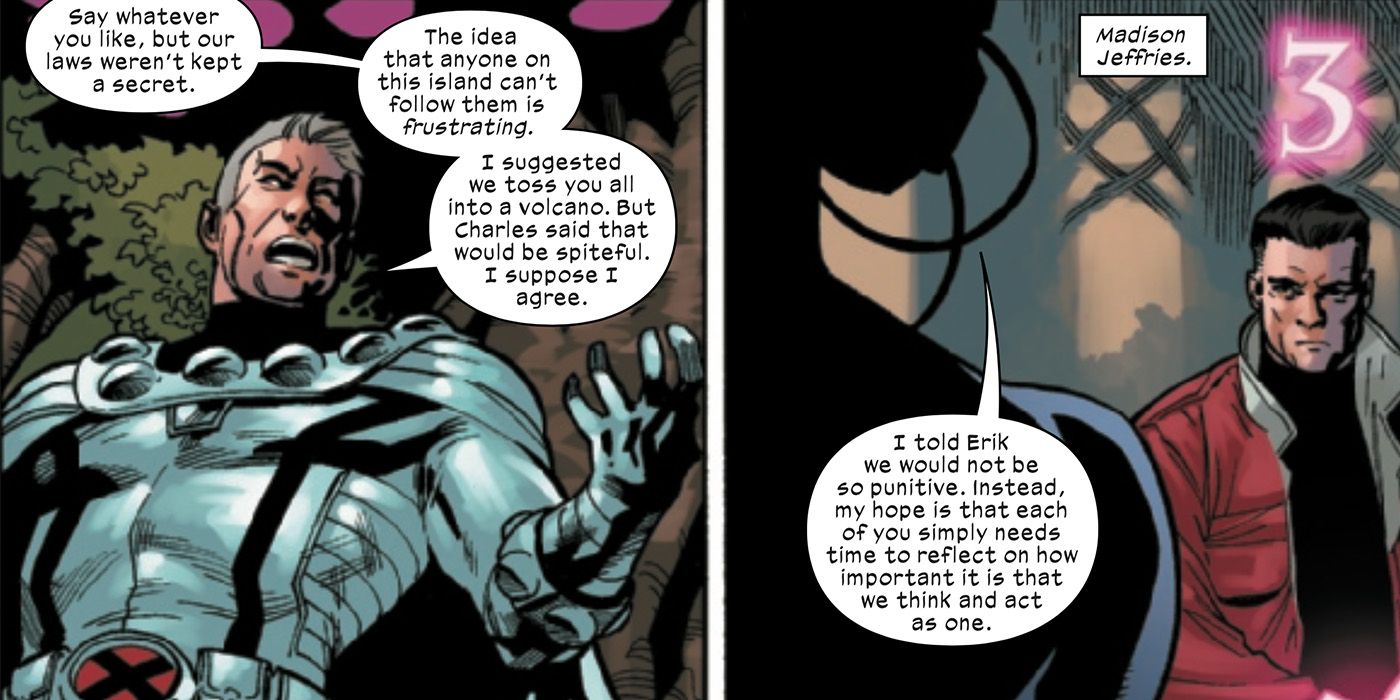
In Sabretooth #2, Professor X and Magneto debate the fates of a group of mutants, Nekra, Oya, Melter, Third Eye, and Madison Jeffries, who have all broken Krakoa's laws. While Erik admits that he wouldn't mind seeing them killed, Charles states that the group "simply needs time to reflect on how important it is that [mutants] think and act as one," and advocates for them to placed in the Pit. As the only prison on Krakoa, the Pit has previously become Sabretooth's domain as he plots his revenge on the rest of Krakoa.

Related: The Horrifying Truth of Superman's Phantom Zone Has Been Revealed

While Professor X thinks he is being enlightened in his choice to imprison the mutants, he is actually just bringing an antiquated approach to prisons in human society into Krakoa. Charles's idea that the law-breaking mutants will have "time to reflect" on their actions recalls the purpose and creation of penitentiaries, which comes from the Latin root for "repentance." Penitentiaries were designed to be places where inmates could do exactly what Charles asks the mutants to do here: think on their sins. But this idea is contrary to what Krakoa's mission, which is to liberate mutants from the worst aspects of human society. As Daredevil's comics demonstrate, prisons are far from places where people can reflect safely on their slights.
As well-meaning as Professor X is, it is clear that he could use some insight about the criminal justice system, which Daredevil has more than enough experience with. Having been a lawyer, district attorney, vigilante, and prison inmate, Matt Murdock has experienced various sides of the American justice system, leading him to realize that it is fundamentally broken beyond repair. While Daredevil isn't a mutant, his life behind bars would give Xavier critical insight into the fact that prisons aren't a one-size fits all solution to wrongdoing.

While Krakoa has given mutants the chance to be free from the violence and persecution they experienced in human society, its challenges have resulted in its leaders erecting the very same institutions they swore to abandon in their new home. Daredevil has tirelessly proven that the traditional view of prisons as places of repentance is vastly incongruent with its reality, and it is clear that only he carries insight that could stop Professor X from continuing to destroy what made the X-Men's Krakoa such a utopia.

Next: Superman's Twisted Prison is Finally Called Out By Marvel


Comments

Popular posts from this blog

CBS' Ghosts: Every Main Ghost Time Period & Backstory Explained

One of CBS' newest sitcoms,  Ghosts , features a cast full of spectral characters that each hail from a distinct time period and come with their own unique backstory and death. Though each of the eight ghosts has a wildly different perspective based on their different experiences throughout history, they nonetheless form a sort of family, which is one of the show's greatest charms. After all, being stuck with the same people for all of eternity allows for plenty of time to get to know each other. Ghosts , which is an adaptation of a BBC show of the same name, stars Utkarsh Ambudkar and Rose McIver (who played Liv Moore on five seasons of  iZombie ) as Jay and Sam, a young couple who inherit a mansion in upstate New York. To their surprise, however, the house also comes with several ghostly inhabitants, who Sam is able to see after a near-death experience. These are Thorfinn (Devan Long), Sasappis (Román Zaragoza), Isaac (Brandon Scott Jones), Hetty (Rebecca Wisocky...

The Hateful Eight's Original Ending Explained (& Why Tarantino Changed It)

The Hateful Eight has an ending full of blood and betrayal, as expected from any Quentin Tarantino movie, but this wasn’t the original ending – here’s why he changed it. Tarantino has explored different genres throughout his career; though he’s best known for his crime movies like Reservoir Dogs and Pulp Fiction , he's also visited genres like martial arts (with both Kill Bill  films) and black comedy ( Once Upon a Time in Hollywood ). In addition, he's shared his version of westerns with Django Unchained and The Hateful Eight , with the latter going through some problems and creative changes even before it began shooting. Set in 1870, Tarantino's The  Hateful Eight follows eight strangers, all with different (and secret) motivations, who end up in a stagecoach lodge after seeking refuge from a blizzard. These characters are Major Marquis Warren (Samuel L. Jackson), John “The Hangman” Ruth (Kurt Russell), Daisy Domergue (Jennifer Jason Leigh), Chris Mannix (Walton Gog...

Why Spider-Man 3's Uncle Ben Retcon Doesn't Change Peter's Origin

Sam Raimi’s Spider-Man 3 is often criticized for a major retcon made to Uncle Ben’s death , but this retcon ultimately doesn’t change Peter Parker’s classic origin story. Raimi’s third film in the iconic Spider-Man trilogy is often criticized, perhaps unfairly. While the film suffers from too many character arcs and plot threads and would have been better as two or three separate films, it does a more than adequate job adapting the Spider-Man comics and telling a sincere story about relatable, flawed, characters who are intertwined with the extraordinary, just as Stan Lee and Steve Ditko intended when co-creating the character. Uncle Ben’s retconned death may alter classic elements from the comic version, but it retains its most important aspects in regards to Peter’s characterization. 2002’s Spider-Man is, for much of the film’s first half, a faithful adaptation of Spider-Man’s 1962 origin story in issue 15 of the Amazing Fantasy comics. An awkward social pariah, Pete...