Warning: This article contains descriptions of systemic racism and police brutality.
We Own This City is a limited series on HBO Max revolving around the struggling reform of the Baltimore Police Department after the killing of Freddie Gray. The series is based on Baltimore Reporter Justin Fenton's nonfiction book of the same name about the true story of the rise and fall of the Gun Trace Task Force (GTTF). This elite unit ruled the city of Baltimore like a gang. They wrongfully searched civilians, stole money, planted drugs, and committed acts of brutality, all under the protection of the badge. The mini-series deftly explores the individual dirty cops that lead to systemic corruption within a police department.
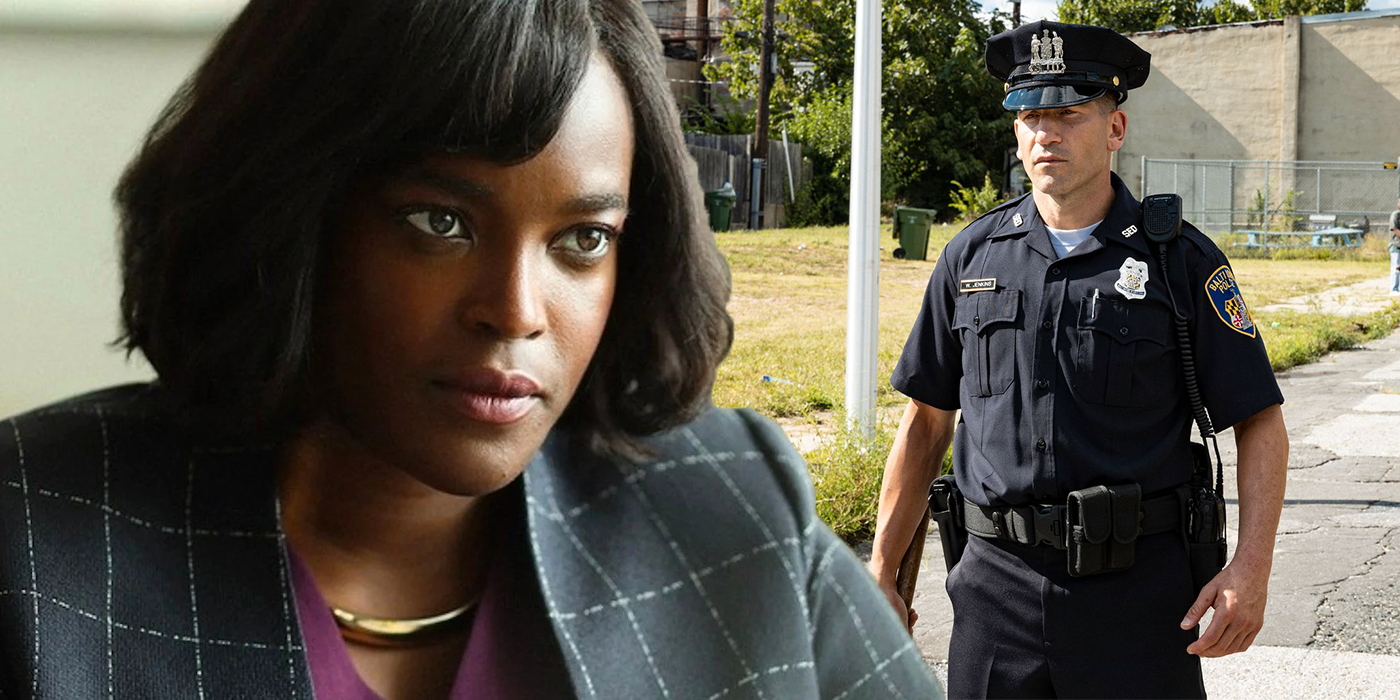
We Own This City is produced by The Wire's David Simon and George Pelecanos, who have committed their work to shedding light on the deep-rooted rot, corruption, and failure of America's police institutions. The limited series primarily follows the corruption of the GTTF with Jon Bernthal’s (The Punisher) Sgt. Wayne Jenkins. Beyond him, the series also touches on the true story of the fallout of Freddie Gray’s death and the BPD's systemic racism.
On April 12, 2015, Freddie Gray, a 25-year-old Black man, was arrested by police for his possession of a switchblade, which was legal for him to have. While being transported in a police van, Gray sustained multiple injuries, including a nearly severed spinal cord. Unconscious and not breathing, he was rushed to the R. Adams Cowley Shock Trauma Center, but after a seven-day coma, he passed away. While his injuries were initially ruled accidental, eyewitness accounts of the arresting officers using excessive force required the department to launch an investigation and later reforms, overseen by then-BPD police commissioner Kevin Davis, the character in We Own This City played by Delaney Williams. The six officers involved in Freddie Gray's arrest were suspended two days after his death, when the civilian footage of Gray's arrest showed him screaming in pain.

The medical examiner upheld the eyewitness accounts and found that Freddie Gray had sustained his injuries during transport. The examiner ruled that the severity of his injuries could not have been an accident and changed the cause of death to homicide. The department investigation into Gray's death then found he was not properly restrained in the vehicle and instead was shackled and loaded into the van on his stomach with his hands cuffed behind his back. It was alleged that the driver had purposely driven recklessly, causing Gray's body to be thrown about the van without any means of protecting himself, resulting in a severed spinal cord.
Gray's death ignited a series of both peaceful protests and violent riots in Baltimore, not only the setting of We Own This City, but also The Wire, Simon's breakout series. Civil disorder intensified with increased looting and burning of local businesses, which led to the Governor of Maryland declaring a state of emergency and deploying the National Guard. The protests and Gray's horrific death prompted the U.S. Department of Justice to launch an official investigation into the Baltimore Police Department.
On May 1, 2015, Baltimore's State Attorney's office filed charges against the six police officers involved on counts of manslaughter, illegal arrest, reckless endangerment, and, in the driver's case, second-degree "depraved-heart" murder. However, not a single officer went to prison. Three were acquitted, one had a mistrial, and the remaining two had their charges dropped. While no justice was served for Freddie Gray's murder, it catalyzed the reformation of the Baltimore Police Department that HBO's limited series We Own This City explores.
New episodes of We Own This City are released every Monday on HBO Max.
Comments
Post a Comment