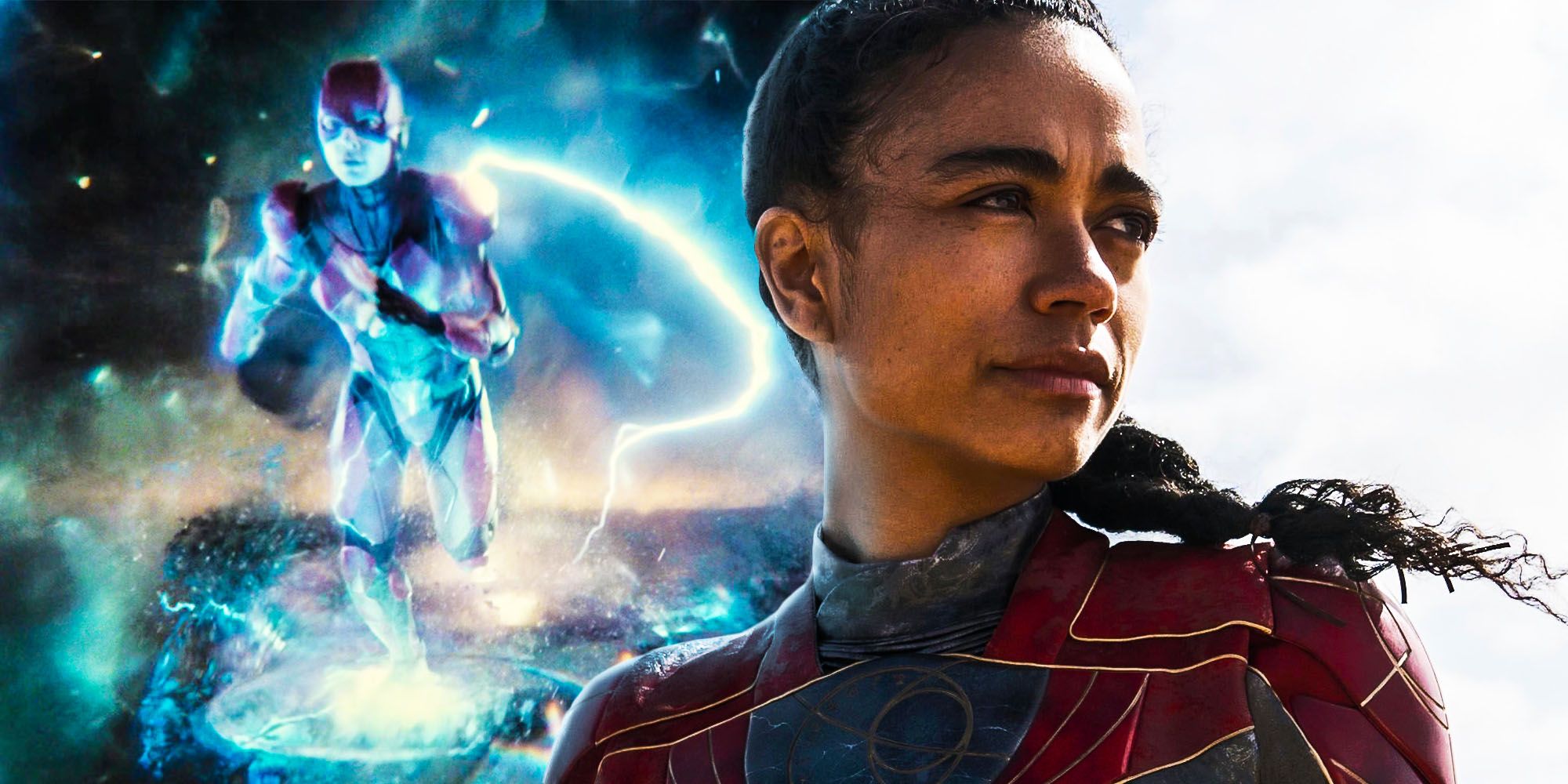
Flash Would Be Absolutely Destroyed by a Surprising MCU Hero

Warning: contains spoilers for Eternals #11!

DC's Flash is widely known as the single fastest hero in the DC Universe, but a particular hero from the MCU would be able to take him down with relative ease. Barry Allen (and Wally West and the other speedsters who have inherited the Flash title) easily outpace most superheroes - each is, of course, capable of running at many times the speed of sound, and can even exceed the speed of light. Yet Eternals #11 proves that all the speed in the world wouldn't save the Flash thanks to a very special anti-speedster weapon.

In a contest between the Flash and the prime speedster of the Marvel Universe, Quicksilver, even Marvel fans know there is no contest at all. Quicksilver can run up to 175 miles per hour, but compared to the Flash, that's effectively standing still. The two have even fought in Marvel vs DC and the Flash easily defeated Magneto's son. But the Marvel Universe has another speedster who is far faster than Quicksilver: Makkari of the Eternals. In the world of Marvel where speedsters are relatively rare compared to the DC Universe, one must create contingency plans for encountering one.

Related: Three Versions of The Flash Unite For One Epic Cover

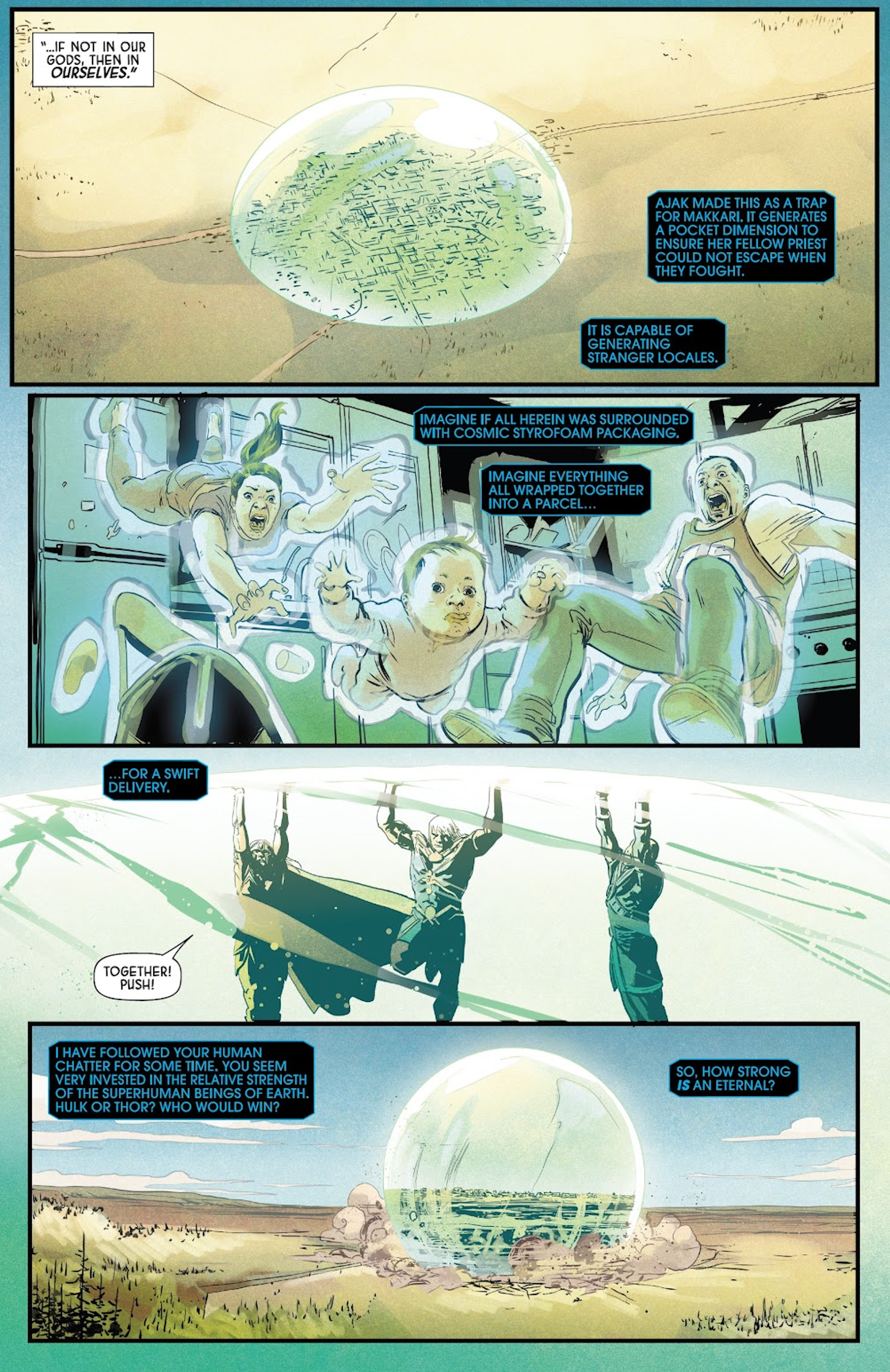
So it goes that in Eternals #11, the Eternals Ajak - the leader of the group best known for her recent appearance in the MCU film Eternals - has created such a device that could stop the speedster Makkari in her tracks. The device generates a stasis field inside a large bubble of space. "Ajak made this as a trap for Makkari," says the Machine through narrative captions. "It generates a pocket dimension to ensure her fellow priest could not escape when they fought." This is a weapon designed specifically to incapacitate Makkari. But would Ajak's device work on the Flash?
In Nightwing #91, Wally West and Dick Grayson team up to take down a common enemy, only for Wally to run headfirst into an invisible wall - a similar trap for a speedster. Flash may have super-speed, but he also has the headstrong persona of a speedster, and his leap-before-looking approach to problems led him straight into trouble. It's logical to assume that Ajak's anti-Makkari device could also be used as an anti-Flash device based solely on the events of Nightwing #91.

The Flash is known for having only one power, but this power makes him nigh-unbeatable in combat. His greatest enemies are either speedsters or foes who can combat Flash's astonishing reflexes and speed (the hero can even perceive time at the attosecond level). Ajak falls into the latter category; with the Eternals' anti-Makkari device, they can easily stop the Speed Force-powered Flash and defeat him as quickly as he defeats his regular opponents.

Next: Zack Snyder's Batmobile Gets Major Cameo in DC's Flashpoint Sequel


Comments

Popular posts from this blog

CBS' Ghosts: Every Main Ghost Time Period & Backstory Explained

One of CBS' newest sitcoms,  Ghosts , features a cast full of spectral characters that each hail from a distinct time period and come with their own unique backstory and death. Though each of the eight ghosts has a wildly different perspective based on their different experiences throughout history, they nonetheless form a sort of family, which is one of the show's greatest charms. After all, being stuck with the same people for all of eternity allows for plenty of time to get to know each other. Ghosts , which is an adaptation of a BBC show of the same name, stars Utkarsh Ambudkar and Rose McIver (who played Liv Moore on five seasons of  iZombie ) as Jay and Sam, a young couple who inherit a mansion in upstate New York. To their surprise, however, the house also comes with several ghostly inhabitants, who Sam is able to see after a near-death experience. These are Thorfinn (Devan Long), Sasappis (Román Zaragoza), Isaac (Brandon Scott Jones), Hetty (Rebecca Wisocky...

The Hateful Eight's Original Ending Explained (& Why Tarantino Changed It)

The Hateful Eight has an ending full of blood and betrayal, as expected from any Quentin Tarantino movie, but this wasn’t the original ending – here’s why he changed it. Tarantino has explored different genres throughout his career; though he’s best known for his crime movies like Reservoir Dogs and Pulp Fiction , he's also visited genres like martial arts (with both Kill Bill  films) and black comedy ( Once Upon a Time in Hollywood ). In addition, he's shared his version of westerns with Django Unchained and The Hateful Eight , with the latter going through some problems and creative changes even before it began shooting. Set in 1870, Tarantino's The  Hateful Eight follows eight strangers, all with different (and secret) motivations, who end up in a stagecoach lodge after seeking refuge from a blizzard. These characters are Major Marquis Warren (Samuel L. Jackson), John “The Hangman” Ruth (Kurt Russell), Daisy Domergue (Jennifer Jason Leigh), Chris Mannix (Walton Gog...

Why Spider-Man 3's Uncle Ben Retcon Doesn't Change Peter's Origin

Sam Raimi’s Spider-Man 3 is often criticized for a major retcon made to Uncle Ben’s death , but this retcon ultimately doesn’t change Peter Parker’s classic origin story. Raimi’s third film in the iconic Spider-Man trilogy is often criticized, perhaps unfairly. While the film suffers from too many character arcs and plot threads and would have been better as two or three separate films, it does a more than adequate job adapting the Spider-Man comics and telling a sincere story about relatable, flawed, characters who are intertwined with the extraordinary, just as Stan Lee and Steve Ditko intended when co-creating the character. Uncle Ben’s retconned death may alter classic elements from the comic version, but it retains its most important aspects in regards to Peter’s characterization. 2002’s Spider-Man is, for much of the film’s first half, a faithful adaptation of Spider-Man’s 1962 origin story in issue 15 of the Amazing Fantasy comics. An awkward social pariah, Pete...