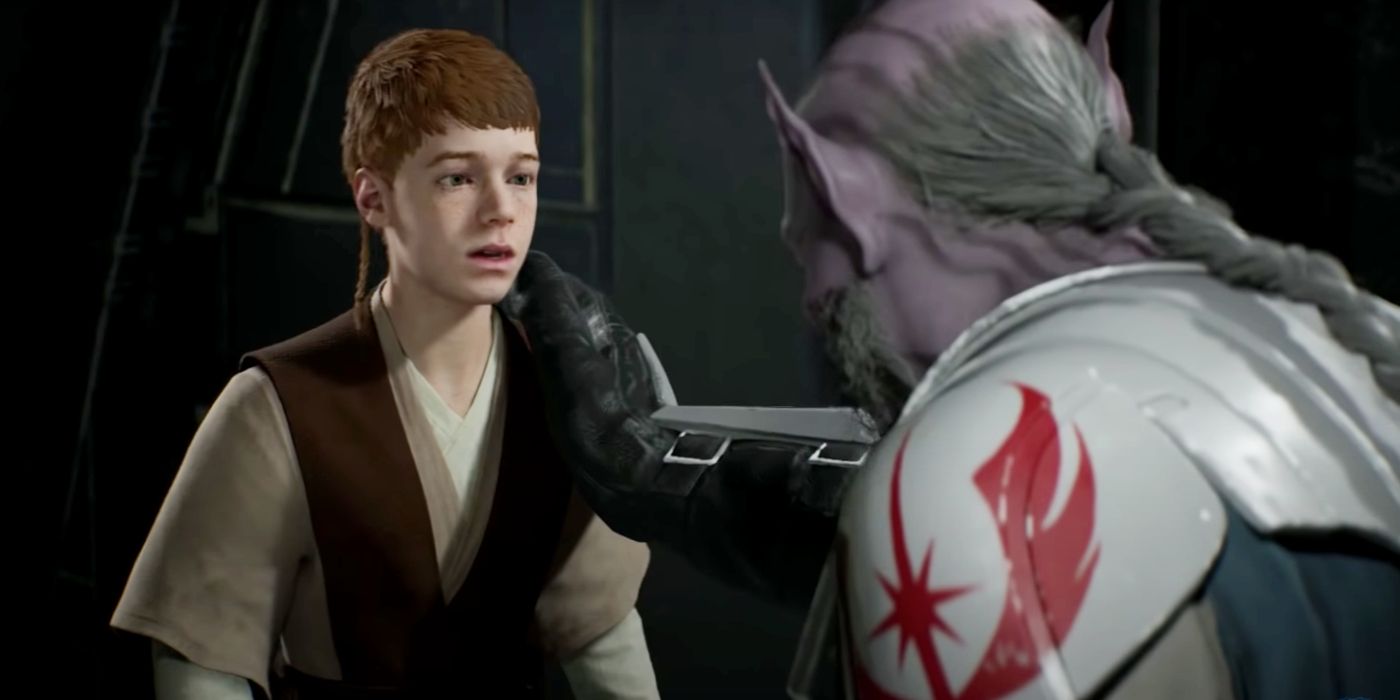
Developer Respawn is expected to make Star Wars Jedi: The Fallen Order 2 darker than the first game, given the rule usually applies to most Star Wars sequels, and a way to achieve that could be through the use of more Clone Wars flashbacks. Fallen Order saw protagonist Cal Kestis traumatically relive the days leading up to the execution of Order 66, with the game also finding time to spotlight the Clone Wars-era master-apprentice relationship between Cere Junda and Trilla Suduri. These sequences were some of the first game's most impactful, and if Jedi: Fallen Order 2 is even darker, it's possible that more could occur.
[Warning: The following article contains spoilers for Jedi: Fallen Order.]
Star Wars Jedi: Fallen Order left the crew of the Stinger Mantis with an open-ended conclusion. The crew, consisting of protagonist Jedi Cal, pilot Greez, former Jedi Master Cere, and Nightsister Merrin, had just destroyed a Holocron containing lists of Force-sensitive children. This followed a dangerous break-in of the Imperial Inquisitor headquarters that left Cere's former Padawan-turned-Inquisitor Trilla dead at the hands of Darth Vader, and the crew with no clear objective.
However, there is still much that can be done with the crew in the next Star Wars Jedi game. The cast of Star Wars Jedi: Fallen Order hasn't crossed over into other Star Wars stories since the first game's release, leaving their fates ambiguous. This opens up many directions the sequel could go, including a path that sees a dark shift in tone. The first game already broached much of the trauma that Order 66 brought the crew in the wake of the Clone Wars through flashbacks with Cal's Jedi mentor and through environmental storytelling covering other victims of the Jedi Purge, but it could take it even further with more flashbacks.

Cal Kestis and Cere Junda were the main focus of flashbacks in Star Wars Jedi: Fallen Order, but that doesn't mean they were the only members of the Stinger Mantis' crew to have been changed by the conflict. There is already a lot of backstory on Cal with his master, but more Jedi flashbacks with Cere in Fallen Order's sequel - specifically relating to her time with Trilla - could show more of how she was tempted by the dark side. A new look into the dark side of the force and how the characters grapple with it would be an interesting theme to explore in a sequel and could open up the possibility of using both the light and dark sides in tandem, similar to Star Wars Jedi Knight: Jedi Academy.
This approach would complement Merrin as a crewmember who has no experience or ability with the light side of the force, relying solely on the dark side-sourced magic of the Nightsisters. Merrin is another character that could be better fleshed out with flashbacks to the Clone War era. As a member of the Nightsisters, Merrin would have been a child when the Separatists - led by General Grievous - exterminated the Nightsister tribes of Dathomir. This experience was a major part of why Merrin distrusted the lightsaber-wielding Cal in Star Wars Jedi: Fallen Order and would be fascinating to explore further in flashbacks.
The extermination of the Nightsisters is a prime example of how flashbacks could not only further the character of Merrin but also lean into a darker tone to reflect a potentially darker sequel. With the Clone Wars providing a collective conflict for the entire crew of the Mantis, it would make sense to revisit it in a sequel. It would be a missed opportunity for Star Wars Jedi: Fallen Order 2 to not show more of the Clone Wars and how it shaped these characters into who they became.
Comments
Post a Comment